JavaScript seems to be disabled in your browser. You must have JavaScript enabled in your browser to utilize the functionality of this website.
One of the most versatile pieces of fall protection equipment is the double tie off lanyard, also known as the Y-lanyard. This new breed of lanyard has become a popular choice among safety professionals in recent years. The Y-lanyard attaches two lanyard legs to a shock absorber and snap...
The recent accident in Westwood, MA regarding the fall of a worker clearing snow from the roof of a business, underscores just how dangerous this job can be. In this particular instance, the worker fell through a skylight and landed on the ground 25’ below. In light of the situation,...
Sometimes it's obvious: you're about to work on a scaffold, at the edge of a roof, or on a piece of equipment fifteen feet high and you know instinctively that guard rails are needed.
Other times, it's not so simple. Not because safety railing wouldn't be an intuitive solution, but...
In the world of safety, falls are one of the major causes of fatal injuries. It is the number one killer in construction alone. Something many people in the safety industry are unaware of, is that in the past decade, 43% of all fall fatalities have involved a ladder. Yet, tell an employee...
During fall arrest your body needs a way to reduce the amount of force, and that happens through a shock pack. Shock packs can be added to your personal fall protection system as an extension lanyard, and as part of a single or double leg lanyard. In addition, shock packs can also be ...
There are many reasons why people should wear fall protection, yet countless workers still avoid wearing fall safety equipment. These same workers will blame the employer or the equipment and always look for every reason or excuse for not wearing it. The fact of the matter is that this
New York City is in the middle of a huge underground excavation project that has been going on for years. The pictures from the subterranean world are dramatic and have found their way onto websites and news magazines around the world. As a safety professional, you can't help but notice the...
Below is a comprehensive list of safety railing solutions that are available to our customers. Not every safety railing solution is a fit for every environment, so we've called attention to where each railing works best. All of these safety railing solutions are OSHA compliant unless...
Even with the best of intentions, Self-Retracting Lifelines (e.g. SRL’s) can cause more injuries than almost any other kind of fall protection when they aren't used properly. Using an SRL gives the feeling of extra assurance because you’re clipped in, however, if proper measures are not...
Fall hazards are abundant and varied, making them difficult to protect against. Every single situation is different and employers need to work with employees to ensure that the correct solution is in place. The solutions may be easy or they may be complex but, either way, we have the...
In order for a roof parapet to provide adequate fall protection, a roof parapet railing should be at least 42" in height. Unfortunately, many buildings get close to this height without quite meeting the height required by OSHA to provide fall protection. There are several solutions to...
Excuses, excuses, excuses, that's what we hear from residential and commercial contractors that fail to comply with fall protection policies and standards. In 2011, 251 out of 721 worker fatalities were the result of falls. It's time to stop making excuses and start making the...
Toeboard is an important part of the OSHA safety railing regulation. See one of our past blog posts to learn more about when toeboard is required on your railing. This safety railing, installed around an access point at the Ellenville Flood Protection Project, used integrated toeboard...
Warehouse and loading dock safety often requires the use of safety railing. Safety railing can be used for a number of different purposes in the loading dock and warehouse context. Safety railing can be used to protect people from walking off the end of the dock where the truck pulls up....
Safety is important for every industry, and theatrical work is no exception. This railing installed at Heidelberg Castle on a stage where actors perform. The safety railing is painted black to help it blend in and be unobtrusive. Despite it's color it still fulfills its primary function of...
Mezzanines in the workplace pose a great risk to employees. Though they are useful and often necessary for storage, the creation of additional fall hazards must not be overlooked. If you ever need to access an elevated platform, and that platform is more than 48" high, that perimeter must be...
Impact barriers are a crucial engineering control when working with forklifts inside your facility or warehouse. Impact barriers are physical barriers that are intended to keep building components, storage racking, objects, equipment, materials, and people protected from the dangers of...
It is easy to look at a roof edge and understand the risk of going near it. However, what fall hazards cross your mind while you’re standing in the center of the roof?
The roof access hatch is often an overlooked and underestimated fall hazard. While it is closed, a user may feel safe...
Safety goes further than just having the proper equipment in place. Now more than ever, it’s important to maintain a clean and sterile environment at the workplace. Using proper cleaning methods will prevent damage and increase the longevity of your gear.
For most of us, climbing ladders was something we did for fun on playgrounds growing up. Who would have thought it would turn into a necessary skill in some industries?
Because ladders are so familiar to us, they are often overlooked when it comes to your safety. It is common to see people...
Rooftop walkway systems are often overlooked as not needed and too expensive. When it comes to rooftop safety, we recommend more than minimal protection. The benefits of elevated roof walkway systems on metal roofs protect more than just your workers but your roof as well.
OSHA does not allow chains to be used as fall protection anymore.
Due to this change in OSHA’s code, self-closing safety gates have become the go-to option for ladder protection.
That being the case, we wanted to get a more in-depth look into the mechanics of the industrial safety...
With so many options available on a full body harness, it’s no wonder we primarily shop on price.
Price is important, and so are aspects such as size, buckle types, dorsal ring placement, and even color options! However, there is one major consideration that is not addressed that could...
Niagara Falls has been the subject of much attention leading up to Nick Wallenda's tight rope walk across the falls. Some of the conversation surrounding the tight rope walk has been about safety. For this event, the tight rope walker was actually tied off to the wire to prevent him from falling...
In the last article, we discussed the first level of control when it comes to protecting employees from recognized hazards: elimination or substitution. The concept, while possibly difficult to implement, was simple to understand. Unfortunately, this second step, engineering...
Anytime you are tasked to keep someone safe from falling, one decision must be made first. Do I select a Passive System or Active System?
Understanding the difference between passive and active fall protection is a great place to start.
By now, you may have heard: OSHA issued a new final rule in regards to electronic recordkeeping. Great! What the heck does that mean?
Well, funny you should ask, because I’ve got answers!
Just the Facts
Let’s start with the basics. The final rule was issued by OSHA...
Updated on December 20, 2018 by Josh Borowiec
Rooftop fall protection seems to be one of the most confusing regulations.
Given the amount of different scenarios, it's easy to miss an important detail – or at least misinterpret one. So, here’s a quick and easy by-the-numbers guide...
So, you’ve decided to buy an industrial safety gate! Great! As with any other purchase, there are questions to be answered and options to be selected. Gates, while effective, convenient, relatively inexpensive, and easy-to-install, are not one-size-fits-all. Yes, many gates can each be...
Take a look around the neighborhood you live in. How many fences do you see? Probably quite a few, right? And, where you see fences, how many have no gates? I would venture to guess that the answer is “very few if any.” That’s because a fence is put up for a reason: to keep...
There are some things you can hand to somebody with no instructions and they’ll know how to use them: a pair of boots, a pair of gloves, safety glasses. A fall protection harness is not one of these things. To the untrained eye, a harness is just a jumble of straps and buckles with no...
Back when I began in the field of safety, self-retracting lifelines (SRLs) were frowned upon by workers, not because the function wasn’t preferable, but because they were big, bulky, and very heavy. Over time, things have changed. Technology has improved. And while the cumbersome...
The following safety huddle lists the OSHA standards that regulate and define the specifications for warning line systems in construction fall protection. Refer to 29 CFR 1926.502(f) for more details. Remember, workplace safety is everyeverybody's responsibility.
Definition: warning line...
Kee Walk is a rooftop walk way system built-in modular sections to allow for easy installation. In this video, Kee Safety shows you how to mount a traverse section of Kee Walk to a sloped roof. The ability to create flat walkways on sloped roofs is just one feature of our versatile solution. Kee...
We recently had the opportunity to visit the site of one of our recent roof railing customers in PA. The scope of the project was full roof perimeter protection on two buildings. Their rooftop fall protection included roof railing, skylight screens, and safety gates for ladder access points...
HUGS - Horizontal Under-eave Guard System
The HUGS system was designed to help protect people working on truss mounted roofs. This passive safety solutions provides real protection to workers who are working a heights. Fall arrest systems such as lanyards and harnesses allow for a lot of...
Kee Safety has released an innovative new rooftop walkway system. The system, designed with safety and installation in mind has combined various attachment methods to make installation of this modular system a snap.
Aluminum rails are the base of the system, attached to the roof via
We have had this product available for a while, but have never featured it properly. KeeGuard Metal Roof Top Railings are designed to protect workers who are operating around a roof edge on a metal building. The use of S-5! clips and connectors, means that the railing system will not...
Kee Safety has launched a new line of components for building horizontal lifeline systems. These lifeline systems are designed to take the mystery out of shock absorbing lifeline systems by revealing everything to the installer and user. Unlike the fall over can systems, the Kee Line system...
Skylight screens are a form of fall protection that prevents workers on the roof top from falling into skylights. We have updated the skylight screens section of our web site. We invite you to see the update pictures, features and technical information that is available about our skylight...
Protecting your eyesight on the job is serious business. The video above impresses the importance of making sure you use properly rated ANSI Z87 safety glasses. The consequences of shoddy or imitation safety glasses is not worth the low cost.
Here are some protective eye wear solutions...
This video encourages you not to cut corners with people's safety. Below are a few devices that we carry to try to make operating a ladder safer and easier.
As if falling were not enough, falling onto exposed rebar can turn a survivable fall into a disaster. Rebar caps protect the falling worker from impaling themselves on the concrete rebar that is protruding during the construction process.
Rebar...
Sometimes when working on older buildings or on buildings where the architects kindly left out the fall protection anchors, a non-penetrating anchor system is needed. Weightanka is a non-penetrating roof anchor that uses weight and resistance to safety attach a worker to the roof. A standard
ADA compliance is a requirement on many public buildings (which ones?). Sometimes the existing handrails in a place of business are not ADA compliant. Our ADA handrail system can be used to upgrade an existing hand railing to make it ADA Compliant.
Depending on what type of existing handrail...
Lest one begin to imagine that we are simply tooting our own horn when we talk about hand rail durability, I submit to you the following evidence:
The following handrail was constructed in 1967 using the same fittings and pipe that we sell today. Notice what is missing from these pictures:...
Some projects are a real testament to the durability and quality of our ADA handrails. When Alabama needed to install an ADA handrail on their new State Park Pier they chose to use our ADA fittings to complete the job. The reasons are simple:
For quite awhile our ADA handrails were only available in galvanized steel. With the addition of some fittings we are now able to offer a smooth rail surface in aluminum as well. Check out the pictures below of a modular ADA handrail made completely of aluminum pipe and fittings. Visit the
Falconer, 43, was employed as a seaman on a tugboat operated by maritime company. While carrying an engine part, he fell 14 feet through an open hatch in the engine room causing bodily injury. Falconer sued the maritime company alleging the company was negligent in failing to have safety...
Have you ever noticed that when you take up a particular interest that you tend to see that interest wherever you go. Well, the fact that I sell safety railing made with Kee Klamp pipe fittings makes me really alert to Kee Klamp structures wherever I go. Recently our family took a picnic to...
There are three major areas of concern for ADA compliance. Once you have established that your facility needs to be ADA compliant, the three areas of concern are stairs, ramps, and landings/raised walkways.
As rooftop solar installations grow, so grows the need to access the roof safely.
Part of roof top safety is having a proper rooftop railing installed. On a metal roof there are other safety concerns. The metal ribs can cause a significant trip hazard. Additionally, the metal roof may not be...
A video released by Kee Safety covers the many differences between welded railing and pipe railing that is constructed with pipe railing fittings. Please watch the video to learn about these critical differences.
Pipe railing constructed with Kee Klamp and Kee Lite...
One of our customers had a unique situation on the roof they were working on. The roof had an existing fall protection railing, but it was old, rusted and probably no longer OSHA compliant (see this post about inspecting guardrail). Instead of tearing out the old system completely they...
Some of the Protecta brand double leg lanayards are being recalled due to a problem with the snap hook mechanism. The recall applies to lanyards that were manufactured between July 2010 and October 31, 2011. The manufacture date is marked on the product label of each lanyard. The official...
This safety guardrail was installed on the set of the production of The Conduct of Life at Texas A&M University. The railing was mounted on the stage to prevent the performers from falling over the edge. The railing performed both an aesthetic and functional purpose. Justin M., the...
Parapet railings can be a great solution for providing perimeter fall protection on a rooftop. Parapet railings are appropriate when penetration of the parapet is acceptable. When no penetration can be made or no parapet exists, we recommend our KeeGuard non-penetrating roof railing. Parapet...
Need to access a mezzanine or platform safely? Mezzanine and platform gates can help you gain access to that crucial space in a safe and efficient way. Mezzanine gates allow you to easily forklift materials from a lower level onto a higher platform. Mezzanine gates can be manual, spring-loaded,...
KeeWalk Rooftop Walkway makes it possible to traverse complicated roofs with a level walking surface. KeeWalk's modular nature and unique ability to traverse the rooftop with interlocking stair and flat surface sections make it the best choice for complicated metal roofs. The new terminal at...
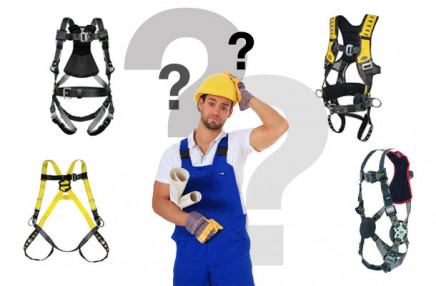
For the longest time we have only offered harnesses from Guardian Fall Protection. We appreciate the harness offering from Guardian, but felt the need to spread out and offer more harnesses from different manufactures who have different options. We have now expanded our offering of harnesses...
According to the ADA Code of Federal Regulations, anytime your facility falls under one of two categories, ADA compliance is necessary. These categories are as follows:
We often talk about harnesses in a very general sense, as if there was only one brand and one type to choose from, but this couldn’t be further from the truth. While each of the safety harnesses you should be selecting should perform as well as the next, based on the fact that they...
Kee Safety's fitting will make it easier to construct parapet railings on the edge of the roof. This fitting is designed to attach to the top of the parapet. From there, the railing hangs over the edge of the inside of the building. The railing is then constructed at an angle away from the...
The railing pictured here is installed at the Continential terminal at Newark New Jersey's International Airport. The modular safety railing was installed around edge of the curb, keeping people away from the space where the bus pulls into the terminal. This application shows that safety...
No one would want to get on an airplane and hear: "Well folks, we got about half way through the safety inspection and decided that was good enough. Now sit back and enjoy the flight." You need to provide total protection for the sake of the person who is working at heights. Industrial safety...
Kee Walk is a rooftop walkway solution that will create a safe walking surface on a standing seam or corrugated metal rooftop. The sections are usually sold in standard lengths that can then be easily attached to the roof surface. Sections can be customized to fit the particular arrangement of...
We have been carrying HEP Saf-T-Rail Impact Barriers for a while now, but we have recently released some new configurations to help make designing your impact barrier quicker and easier. We have designed 6 different railing configurations that allow you to build a guardrail configuration to...
Kee Walk is a rooftop walkway system that allows you to create level walking surfaces on pitched or angled roofs. Here are a few examples of how the Kee Walk system is being used to create a safer walking path for people who work on pitched roofs. You can find out more about Kee Walk on the
Option available in footer.


![Rooftop Parapet Railing for Rochester ATCT [Case Study]](https://sbc-content.s3.amazonaws.com/catalog/product/cache/1/image/440x286/040ec09b1e35df139433887a97daa66f/6/4/6422617643_eaf659662c_z.jpg)


![Massive KeeWalk Installation at Madrid Airport [Case Study]](https://sbc-content.s3.amazonaws.com/catalog/product/cache/1/image/440x286/040ec09b1e35df139433887a97daa66f/b/i/bigstock--150782870_1.jpg)