Active vs. Passive Fall Protection Systems
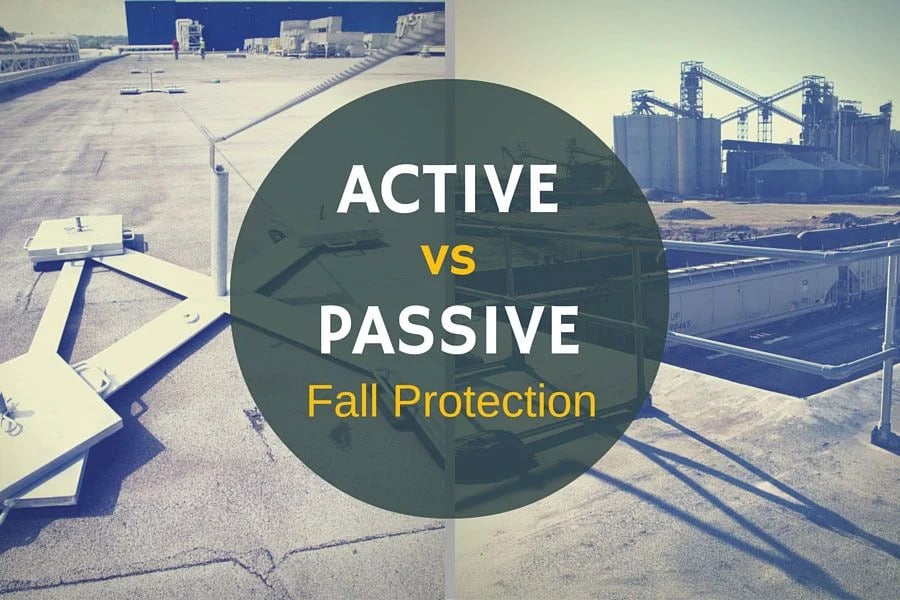
When you’re responsible for protecting workers at height, one of the first and most important decisions you’ll face is whether to use active or passive fall protection systems.
Understanding the difference between these two approaches is critical for facility managers, EHS leaders, and operations managers who want to reduce risk, improve compliance, and simplify safety across commercial and industrial environments.
What Is Active Fall Protection?
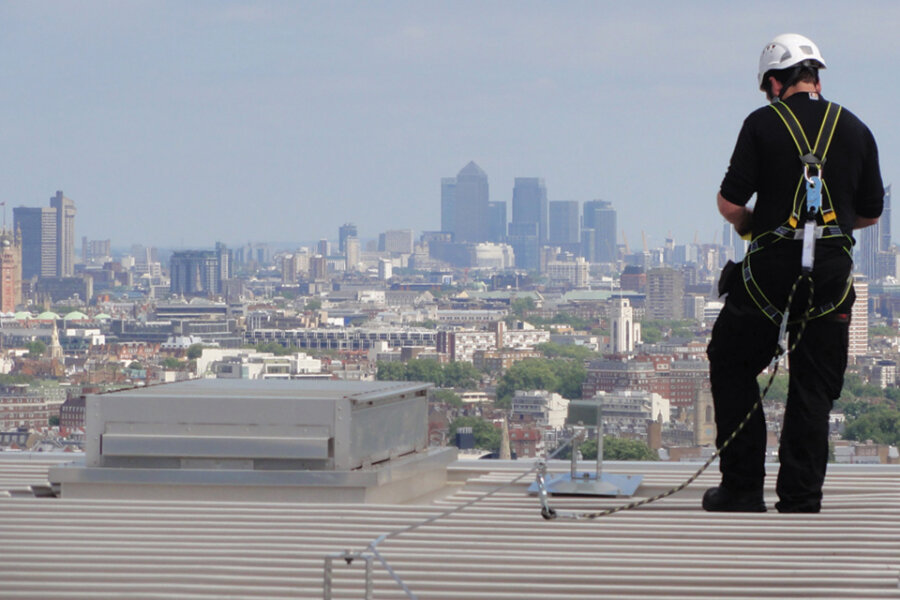
Active fall protection systems require direct worker involvement to function properly. These systems depend on equipment being worn, connected, and used correctly every time work at height occurs.
Common active fall protection systems include:
- Full-body safety harnesses
- Anchor points
- Horizontal lifelines and vertical lifelines
- Overhead rigid rail systems
- Shock-absorbing lanyards and self-retracting lifelines
When active systems are typically used
Active systems are often used when:
- Guardrails or barriers are not feasible
- Work areas change frequently
- Access is temporary or task-specific
- Maintenance or specialized work is performed at height
Pros and limitations of active fall protection in daily facility use
Pros
- Flexible and adaptable to many scenarios
- Often suitable for temporary or infrequent access
- Can be used where permanent systems aren’t practical
Limitations
- Require training, inspection, and enforcement
- Depend on worker compliance every time
- Must be engineered, inspected, and supported by a rescue plan
- Higher risk of misuse or human error
What Is Passive Fall Protection?

Passive fall protection systems provide protection without requiring any action from the worker. Once installed, these systems are always in place and ready to prevent falls.
Common passive fall protection systems include:
Always-on protection
Why passive systems rank higher in the hierarchy of controls
Passive fall protection is considered superior because it:
- Eliminates reliance on human behavior
- Reduces training and enforcement burden
- Protects all workers, visitors, and contractors
- Functions continuously without intervention
How OSHA Views Active vs Passive Fall Protection
OSHA evaluates fall protection through the OSHA fall protection hierarchy, which prioritizes hazard elimination and engineering controls over administrative controls and personal protective equipment (PPE).
- Passive systems (guardrails, barriers) are engineering controls and rank higher
- Active systems rely on PPE and worker action, ranking lower
Real-World Facility Scenarios
In commercial, industrial, logistics, and manufacturing environments, fall hazards are often predictable and recurring:
- Rooftop equipment maintenance
- Mezzanines and elevated platforms
- Loading docks and vehicle service areas
- Catwalks and access ladders
In these scenarios, fall protection options for facilities that are permanent and passive often provide the greatest long-term value by reducing risk exposure every day; not just during planned work.
Which Fall Protection System Fits Your Facility? Real Examples
Active Fall Protection
Temporary Construction Projects
A retail chain is adding solar panels to 12 locations over six months. The roofing contractor uses personal fall arrest systems with mobile anchor points because the work is temporary and moves from building to building. The crews are specialized installers who work at height daily and already own proper equipment. For short-term projects across multiple sites, active systems offer the flexibility needed without permanent installation costs.
Specialized One-Time Access
After severe weather, an insurance adjuster needs to inspect roof damage at a manufacturing facility. The building rarely has anyone on the roof—maybe once every few years for situations like this. The maintenance team sets up a temporary anchor point, and the adjuster uses his personal harness and lanyard. For infrequent access needs, active fall protection provides adequate safety without investment in permanent systems.
Mobile Service Technicians
A telecommunications company has technicians who service cell equipment on 40+ buildings across a metro area. These workers are trained fall protection specialists who carry their own gear and understand proper tie-off procedures. They access different buildings daily, making personal fall arrest systems the practical choice for their mobile operations.
Passive Fall Protection
Rooftop HVAC Maintenance
A food processing plant has four rooftop units requiring quarterly filter changes and occasional compressor repairs. Different HVAC contractors respond depending on availability and the type of service needed. The facility manager installed guardrail systems around the equipment after realizing he was spending hours each month verifying contractor certifications and coordinating fall protection compliance. Now any qualified HVAC technician can safely access the equipment without additional fall protection coordination.
High-Volume Loading Dock Operations
A logistics warehouse runs three shifts with constant loading dock activity. Forklift operators, shipping clerks, truck drivers, and temporary workers move through the elevated dock area dozens of times per shift. Installing edge protection eliminated the need to train every employee and temp worker on personal fall arrest systems. Workers can focus on their actual jobs instead of managing harnesses and lanyards during routine operations.
Multi-Site Standardization
Comparing Active and Passive Systems in Practice
|
Consideration |
Active Fall Protection |
Passive Fall Protection |
|
Worker action required |
Yes |
No |
|
Training dependence |
High |
Low |
|
Risk of misuse |
Higher |
Minimal |
|
Best for |
Temporary or specialized tasks |
Permanent facility hazards |
|
OSHA hierarchy ranking |
Lower |
Higher |
Choosing the Right Fall Protection Approach
Active systems absolutely have a place in fall protection programs, especially when work is temporary or conditions don’t allow for permanent solutions.
However, when hazards are known, consistent, and part of everyday operations, passive fall protection systems often provide a safer, simpler, and more reliable solution.
Learn more about permanent guardrail options for commercial facilities
If you’re evaluating long-term fall protection solutions for your facility, explore how permanent guardrail systems can reduce risk, simplify compliance, and protect workers without adding complexity.
And speak with a fall protection expert about how we can custom design various fall protection solutions for your facility.