Canadian Vehicle Pit Regulations: What Service Facilities Need to Know
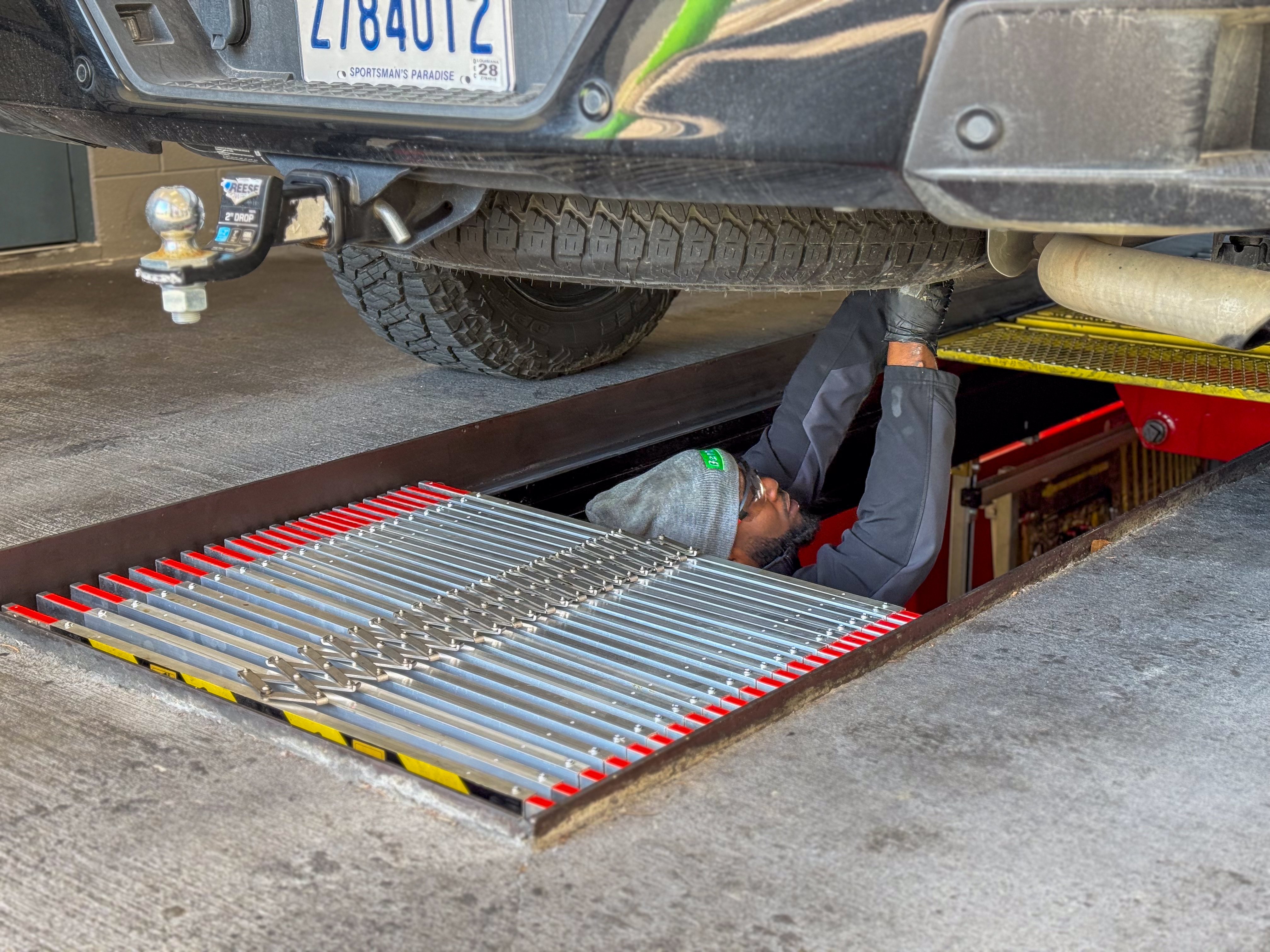
Vehicle service pits are common in automotive shops, fleet maintenance facilities, transit garages, and heavy equipment service centers. And while these pits make inspections and repairs more efficient, they also create a serious fall hazard if left unprotected.
Across Canada, occupational health and safety regulations require employers to protect workers from falls around pits, floor openings, and service bays.
Recently, many facility managers and safety coordinators have reported increased enforcement of these rules by provincial and federal safety authorities.
Why Vehicle Pit Safety Regulations Matter
Vehicle service pits create a significant fall risk. When a pit is uncovered, workers walking across the shop floor may not see the opening, especially in busy or poorly lit environments. A fall into a pit can result in serious injuries including fractures, head trauma, or worse.
Because of these risks, Canadian workplace safety regulations classify pits as floor openings that must be protected whenever employees have access to them.
The regulations apply to many types of facilities, including:
- Automotive repair shops
- Truck and fleet maintenance garages
- Public transit service facilities
- Heavy equipment maintenance shops
- Inspection stations
- Car wash and oil change facilities
Federal Regulations Governing Vehicle Pits
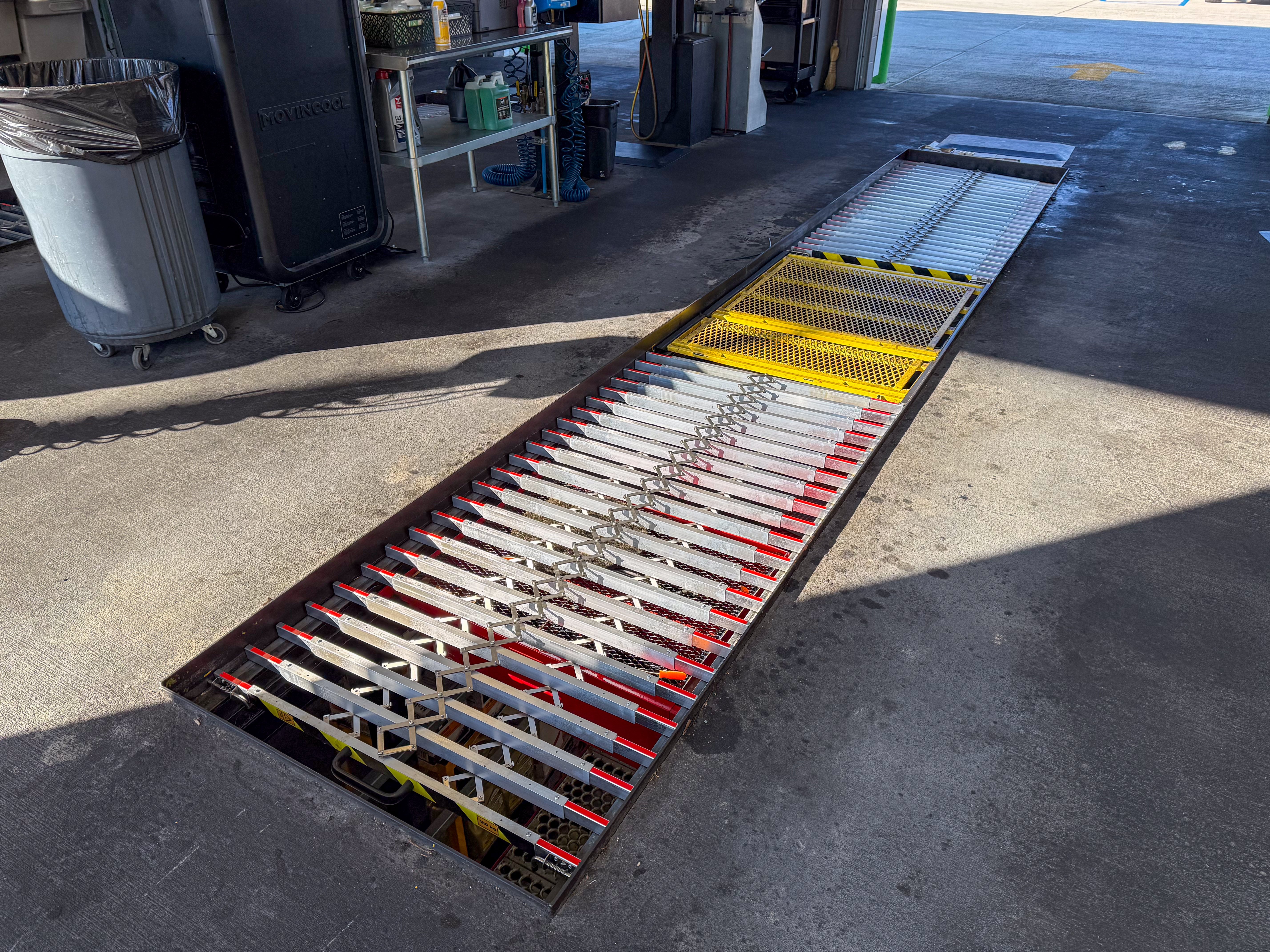
At the federal level, pit safety falls under the Canada Occupational Health and Safety Regulations, enforced by the Government of Canada.
These regulations require employers to prevent falls through floor openings, including pits used for maintenance or service work.
Key Federal Requirements
According to the regulations, if a workplace contains a pit, floor opening, or wall opening with a drop of more than 1.2 meters (approximately 4 feet), protection must be provided.
This protection must include one of the following:
1. Protective Covering
The opening must be covered with a material that:
- Prevents a person from falling into the pit
- Can support all loads that may be applied to it
- Is properly supported by structural members
- Is securely fastened in place
Covers may include grating, screens, engineered platforms, or other structural covers designed for workplace loads.
2. Guardrail Protection
If the pit cannot be covered, it must be protected by guardrails that are:
- Highly visible
- Installed around the opening
- Designed to prevent workers from entering the hazard zone
3. Walkway Requirements
In some cases, the regulations allow a minimum 500 mm (about 20 inches) wide walkway fitted with visible guardrails around the pit.
However, this approach is not always practical in busy service facilities where workers frequently move equipment, tools, and vehicles around the shop floor.
Identification and Visibility Requirements
For pits used in vehicle maintenance, Canadian regulations also require that they be clearly identified.
This typically involves:
- High-visibility paint or striping around the perimeter
- Floor markings that delineate the pit edge
- Signage identifying the pit hazard
The goal is to ensure workers can easily recognize the opening and avoid accidental falls.
However, markings alone do not replace the need for physical fall protection if the pit depth exceeds regulatory thresholds.
Provincial Regulations and Enforcement
While federal regulations provide baseline standards, most workplaces fall under provincial occupational health and safety legislation.
Each province may have its own rules or additional requirements.
Examples include:
- Ontario Ministry of Labour, Immigration, Training and Skills Development
- WorkSafeBC
- Alberta Occupational Health and Safety
Although the exact details vary, most provincial regulations align with federal standards and require fall protection when workers are exposed to drops between 1.2 m and 2.4 m (4–8 ft).
Many provinces also require employers to implement a hierarchy of controls, meaning hazards should be eliminated or physically protected whenever possible rather than relying solely on warnings or administrative policies.
Common Pit Safety Challenges in Service Facilities
Even when facility managers understand the regulations, implementing effective pit protection can be challenging.
Some of the most common issues include:
Heavy Steel Pit Plates
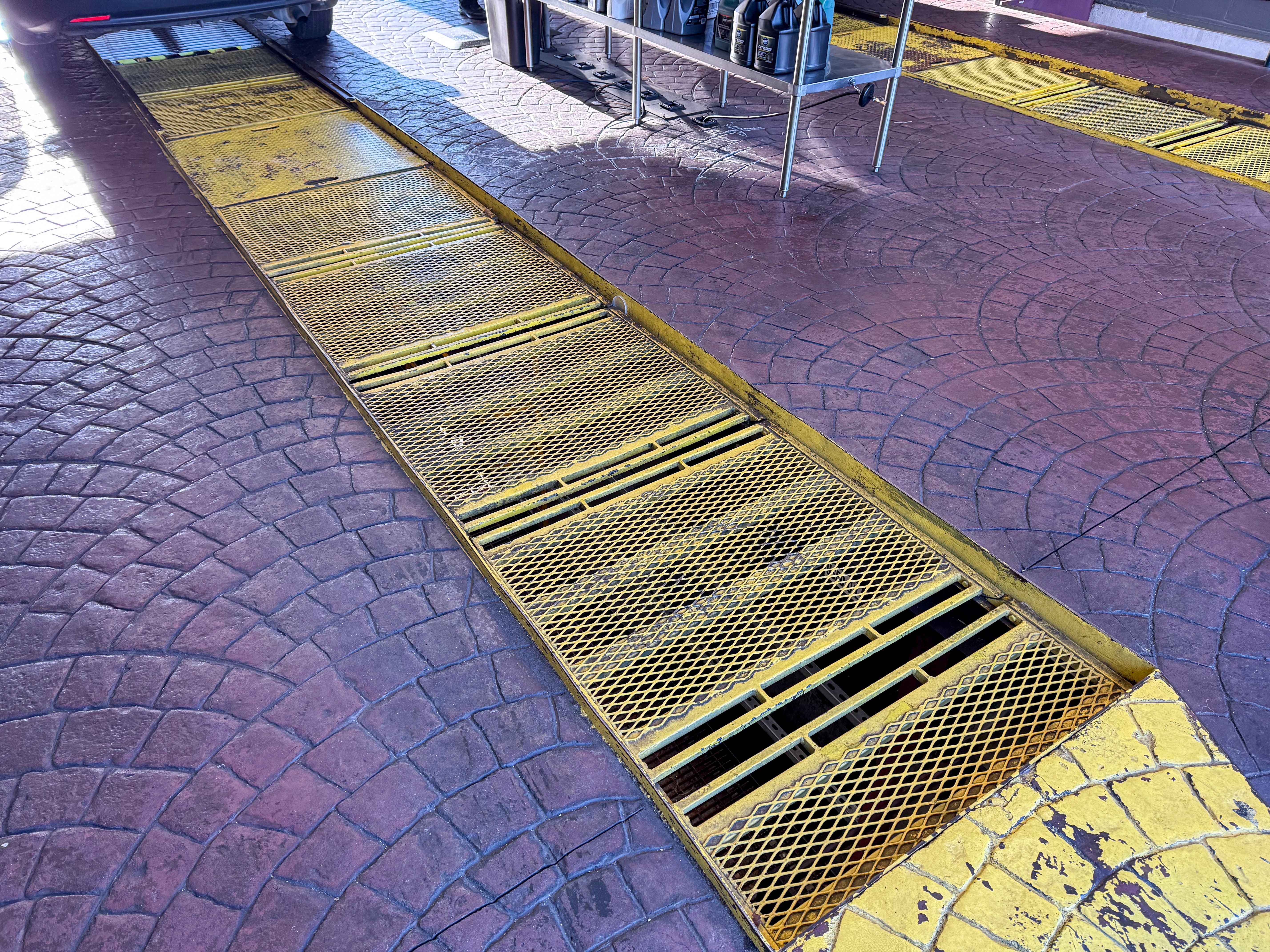
Many older facilities rely on large steel plates to cover pits when they are not in use.
While effective, these plates introduce new hazards:
- Extremely heavy lifting requirements
- Risk of strains or back injuries
- Difficult storage and stacking
- Workers forgetting to replace the covers
Temporary Barriers
Some facilities use cones, tape, or portable railings to block off pits.
These solutions often fail because they:
- Are easily moved or forgotten
- Do not physically prevent falls
- May not meet regulatory standards
Workflow Disruption
Guardrail systems can sometimes interfere with vehicle movement or technician access to the pit.
A Safer Approach: Engineered Pit Cover Systems
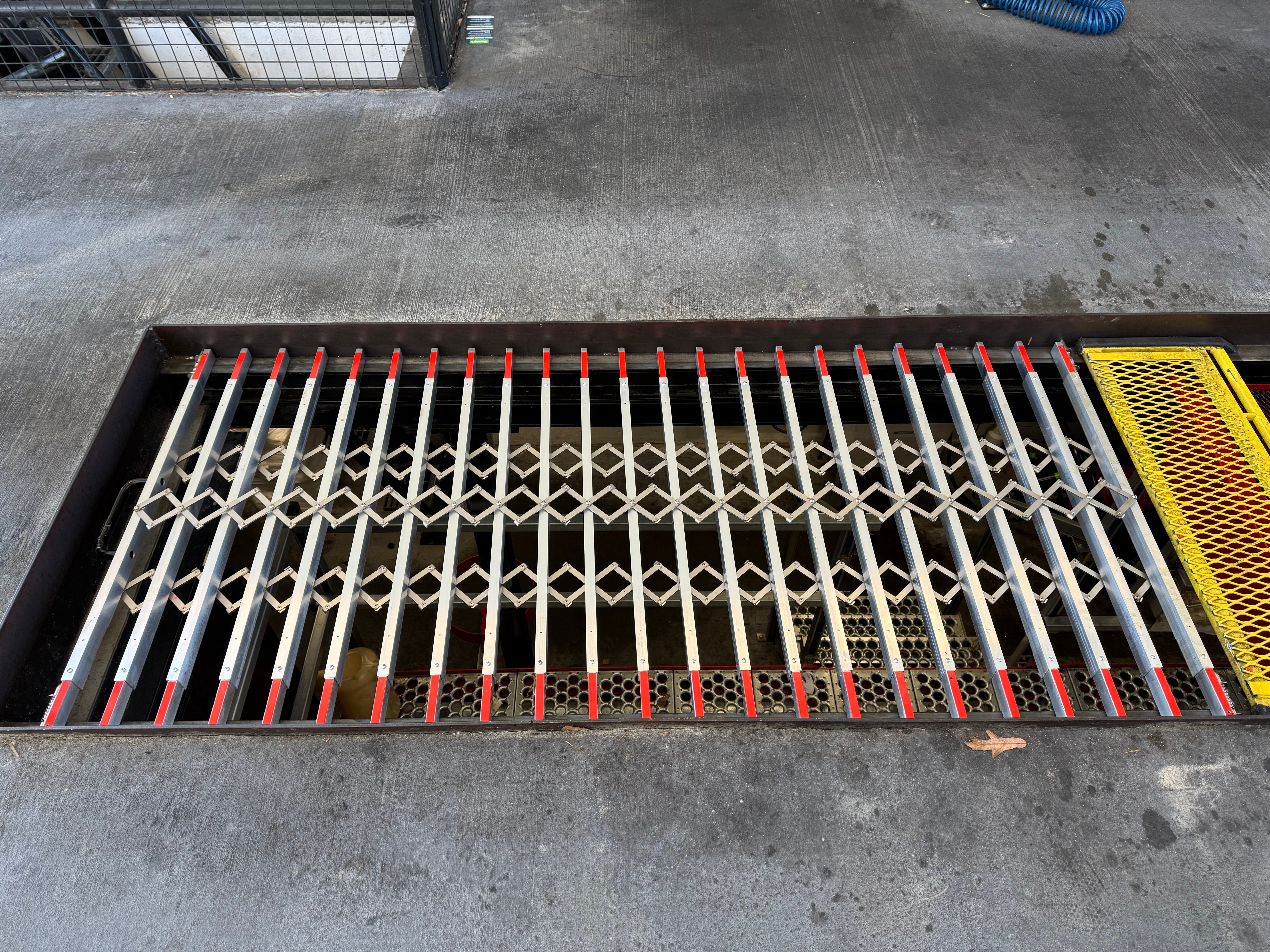
Modern safety solutions are designed specifically to address the unique challenges of vehicle service pits.
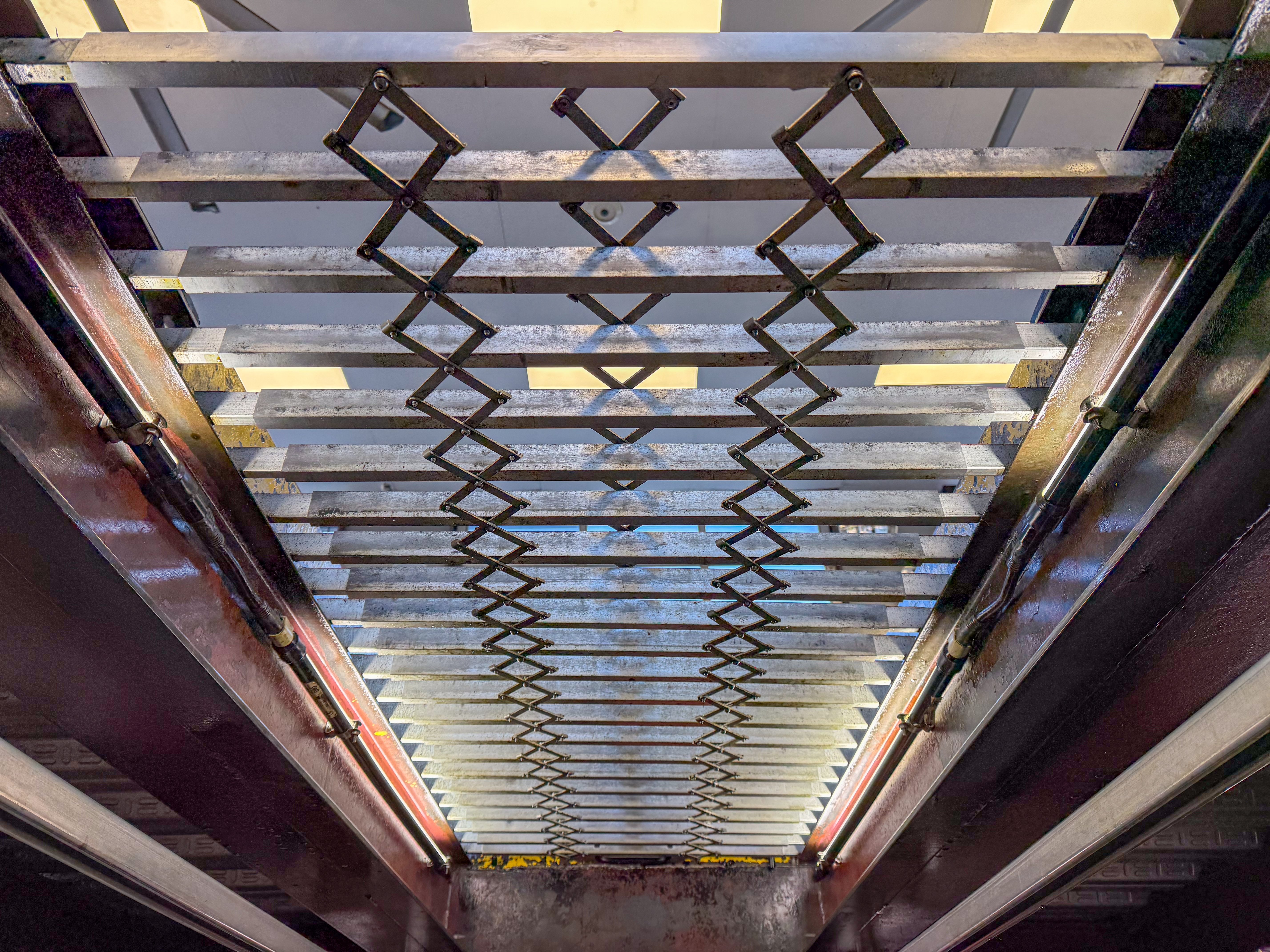
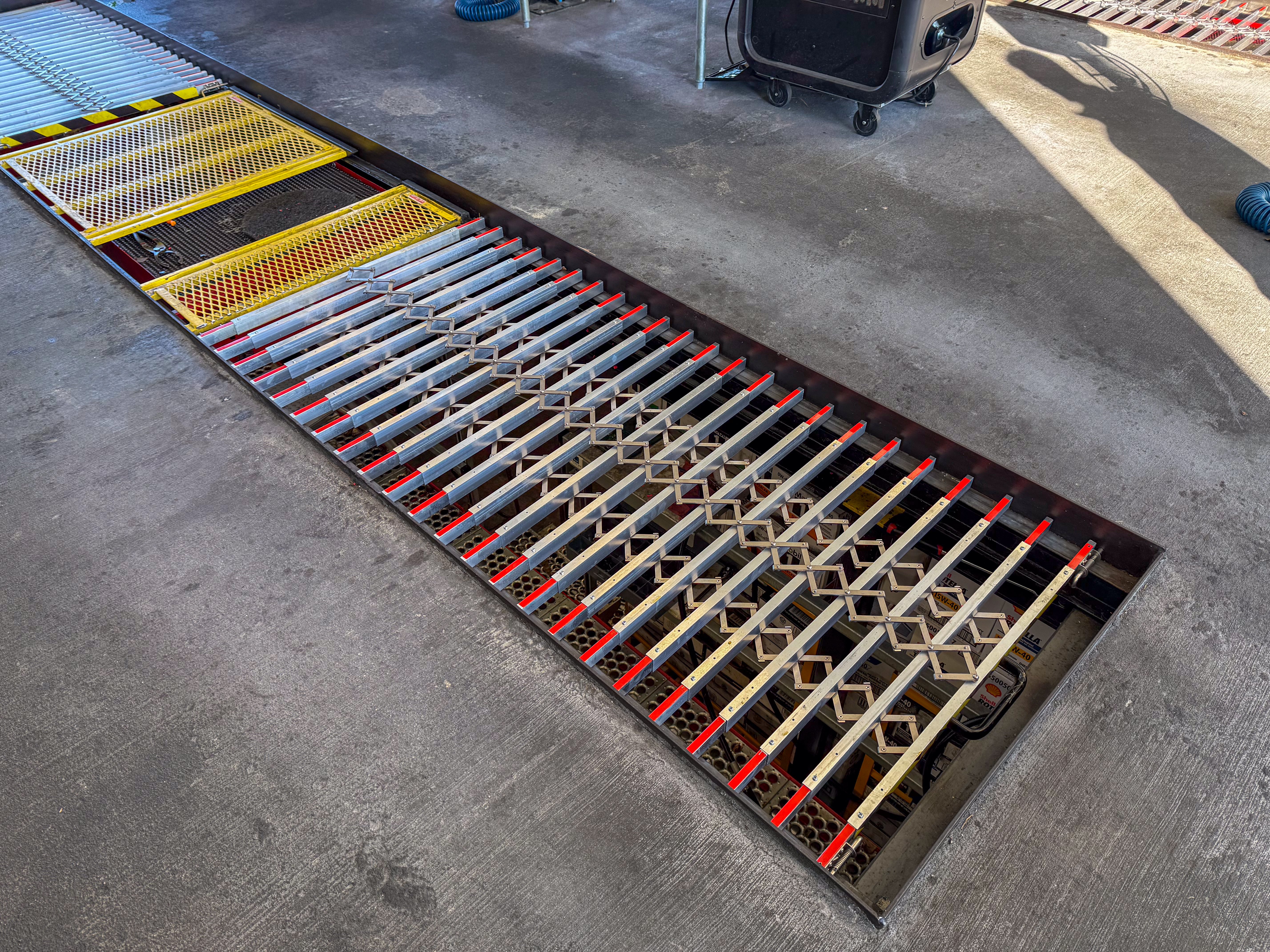
One example is PitProtect, an adjustable pit cover system.
How PitProtect Works
PitProtect uses an expandable platform system that spans the pit opening.
When installed, it:
- Creates a stable walking surface over the pit
- Helps prevent falls into the opening
- Supports typical loads encountered in service environments
- Allows technicians to quickly open sections for maintenance access
Benefits of Using PitProtect for Canadian Facilities
For facilities operating in Canada, pit cover systems like PitProtect offer several advantages.
1. Improved Fall Protection
By physically covering the pit, the system helps prevent workers from accidentally stepping into the opening.
This aligns with Canadian safety regulations that require pits to be covered or guarded.
2. Reduced Manual Handling Hazards
Traditional steel covers often weigh hundreds of pounds.
Expandable pit covers remove the need for heavy lifting, helping reduce musculoskeletal injuries.
3. Faster Access to the Pit
Technicians can quickly open or close sections of the cover when servicing vehicles.
This improves productivity while maintaining safety.
4. Cleaner, Safer Shop Floors
Industries That Benefit from Pit Protection
Many Canadian industries rely on vehicle service pits.
Facilities that commonly implement pit covers include:
- Municipal fleet garages
- Bus and transit maintenance depots
- Truck repair facilities
- Car washes and quick-lube centers
- Heavy equipment service shops
Preparing for Increased Safety Enforcement
If Canadian safety authorities continue increasing inspections and enforcement around vehicle pit hazards, facility managers should take proactive steps to ensure compliance.
Recommended actions include:
1. Conduct a Pit Safety Assessment
Evaluate each service pit to determine:
- Depth of the opening
- Current fall protection measures
- Worker exposure risks
2. Review Applicable Regulations
Consult both federal regulations and provincial occupational health and safety legislation.
3. Implement Physical Fall Protection
If pits exceed fall thresholds, install appropriate protection such as:
- Guardrails
- Engineered pit covers
- Integrated pit safety systems
Train Employees
Workers should understand:
- The hazards associated with open pits
- How safety systems operate
- Proper procedures for accessing the pit
Final Thoughts
Vehicle service pits remain one of the most common fall hazards in automotive and fleet maintenance facilities. Canadian occupational health and safety regulations require employers to protect workers whenever pits exceed the established fall thresholds.
Engineered solutions like PitProtect provide a safer, more efficient way to protect pits while maintaining access for maintenance work. As safety enforcement increases across Canada, upgrading pit protection systems can help facilities improve compliance, reduce injuries, and create safer workplaces for technicians.
If you would like to talk with someone directly about your vehicle pit safety options, contact our team of fall protection experts to discuss the best way to protect your team around vehicle maintenance pits.
