Safe Access Checklist for Data Center Cooling Equipment
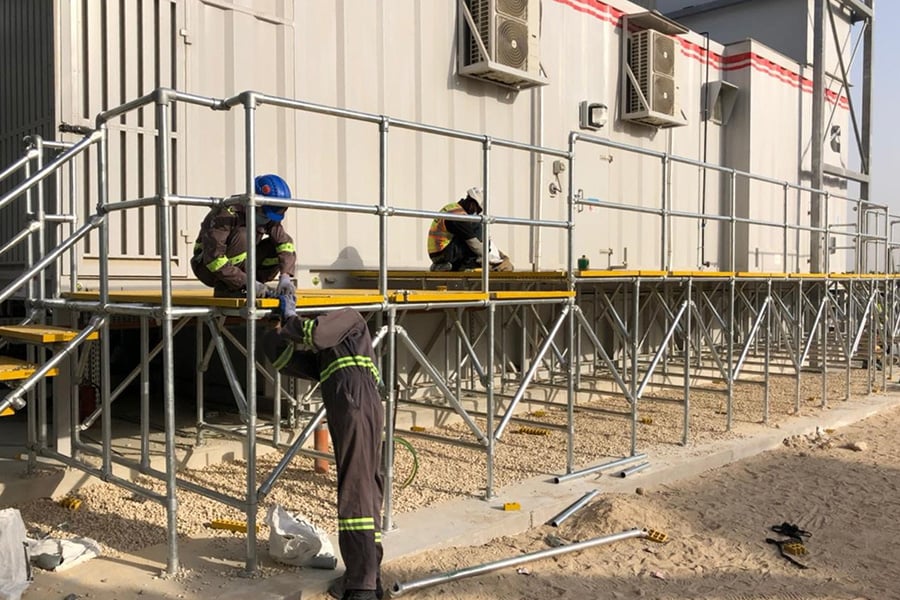
Cooling equipment zones are among the highest-risk areas on any data center roof.
These spaces are congested and heavily trafficked by HVAC techs, commissioning teams, and facility vendors. This makes them the most common source of slips, fall hazards, and maintenance-related injuries.
As data centers scale in density and complexity, the need for controlled, predictable rooftop access becomes essential for both safety and uptime.
Why Cooling Equipment Requires Controlled Access
Congestion Around RTUs
Data centers pack rooftop RTUs, CRAC/CRAH support equipment, and condensing units into tight clusters to optimize airflow and mechanical efficiency.
But this density creates cramped walk paths, uneven surfaces, and limited standing room. One misstep around ductwork or piping can push a technician into a dangerous zone.
Heavy HVAC Technician Traffic
These areas are visited more than any other equipment on the roof. Technicians access cooling systems for routine filter changes, coil cleaning, preventative maintenance, balancing, and emergency repairs.
More traffic = more chances for slips, trips, and exposure to fall hazards.
Heat Exhaust + Slip Zones
Cooling equipment discharges hot air and often creates condensate or moisture around coils and drain lines. Combined with membrane roofs, this becomes a slip hazard especially near sloped sections, low parapets, or edges.
The Cooling Equipment Access Checklist

Use this checklist during design, commissioning, or annual rooftop audits:
1. Safe, Defined Approach Paths
Workers should have a clear, level route to every cooling asset. No improvised routes, no balancing along roof seams, and no forced detours around hazards.
2. Proper Clearances Around All RTUs & Cooling Units
Ensure enough room for technicians to move freely, open access panels, and safely position tools or testing equipment.
3. Guardrail at Edges & Low Parapets
Cooling equipment is often installed too close to the perimeter. Any parapet under 42" requires guardrail. Even with taller parapets, equipment placement can create unsafe approach angles.
4. Dedicated Service Platforms
Working on uneven roof surfaces increases fatigue and accident risks. Stable platforms at coil access points or high-touch maintenance zones greatly improve safety and productivity.
5. No Unprotected Step-Overs
If workers must cross:
- Cable trays
- Piping
- Conduit banks
- Ductwork
- Elevation changes
The Most Common Fail Points in Data Centers
Even well-designed data center roofs develop safety gaps over time. These are the most frequent failure points:
Parapet Height Inconsistencies
Different sections of the roof may have inconsistent parapet heights. Any drop below 42" instantly becomes a fall hazard, often right where cooling equipment is installed.
Ladder Exit Landings
Many data centers have unsafe ladder exits or poor transitions from roof hatches, leading directly into congested equipment clusters without a landing platform.
Uneven RTU Spacing
Tight clusters, offset rows, or non-uniform spacing force technicians to walk in unprotected areas or squeeze between units in unsafe ways.
Skylight Placement Near Cooling Equipment
Skylights positioned close to condensers or RTUs are a major fall-through hazard. Especially older units that look solid but are not rated for impact (which spoiler alert, most skylights aren’t going to be rated for the impact they would likely face in this scenario).
Cable Trays Crossing Walkways
How to Bring Cooling Zones into Compliance

Permanent, engineered access systems make cooling zones safer, protect technicians, and standardize service routes. They also help EPCs deliver repeatable designs that commissioning teams and facility managers can rely on long-term.
Kee Walk for Service Routes
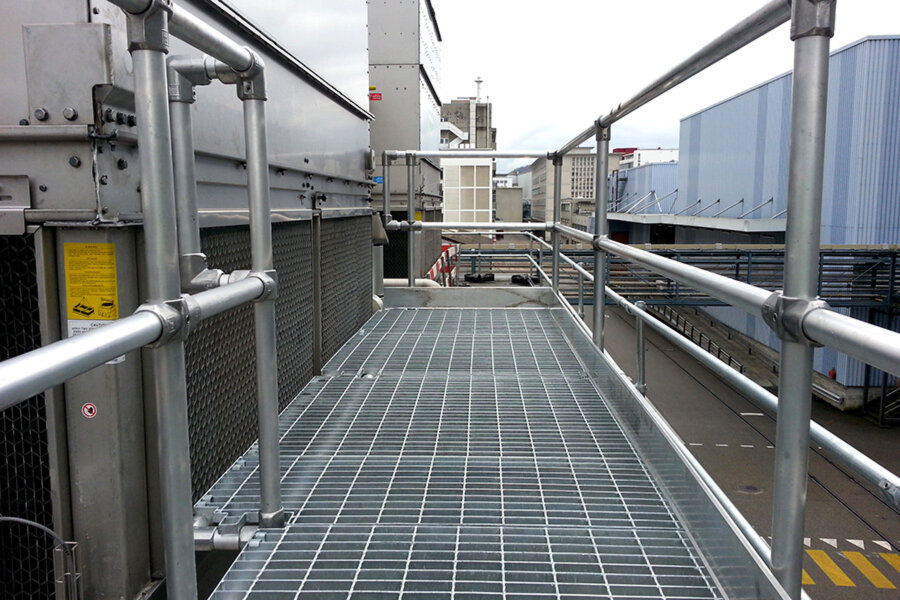
Kee Walk rooftop walkways creates level, predictable walkways through congested cooling zones—helping workers avoid membrane damage, slip hazards, and uneven surfaces. It also clearly defines where technicians should walk, reducing accidental detours into hazardous spaces.
Custom Platforms for Cooling Equipment
Custom platforms give technicians proper working-height surfaces around RTUs, CRAC/CRAH equipment, coils, and access panels. These platforms eliminate the need to kneel on sloped roofs or balance across gaps, greatly improving safety and efficiency.
Kee Guard for Edge Protection
Final Thoughts
Cooling equipment areas are the most hazardous zones on a data center roof, but they’re also the easiest to fix with the right combination of walkways, platforms, and guardrails.
If you’re looking to begin your next project towards making your data center safer for your team and outside contractors, reach out to our team of fall protection specialists. They will help assess your facility and design the optimal safety solutions for your data center.
