How to Choose the Right Industrial Work Platform for Your Facility
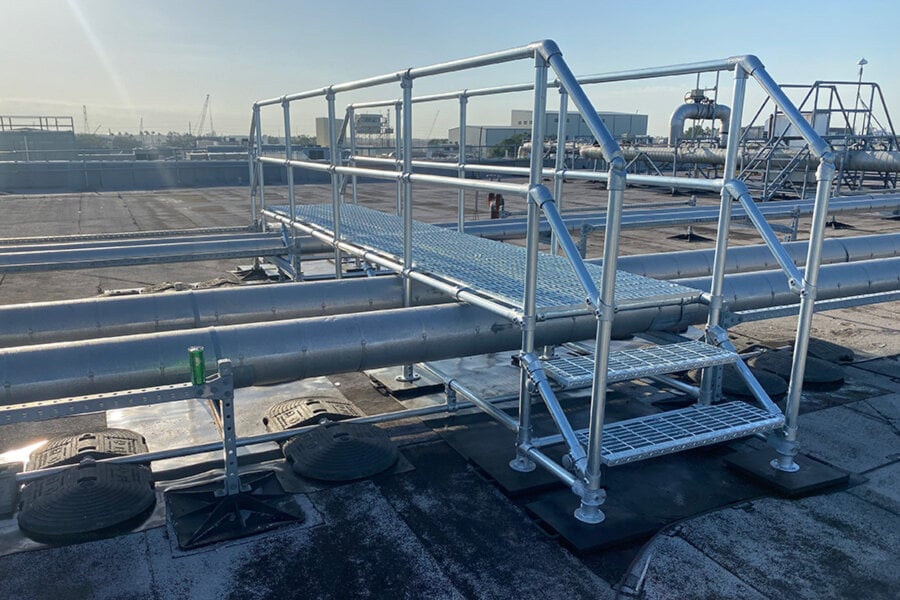
In any industrial environment, safety and efficiency depend on proper access to elevated work areas.
Industrial work platforms play a vital role in giving workers stable, secure access for maintenance, production, and inspection tasks. Choosing the right platform not only enhances productivity but also helps reduce downtime, prevent injuries, and ensure OSHA compliance.
What is an Industrial Work Platform?
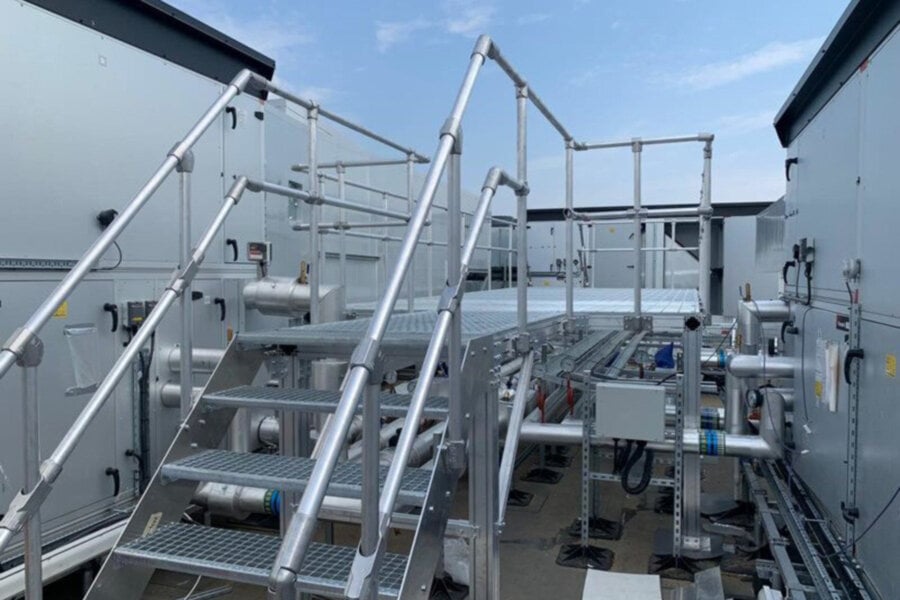
Industrial work platforms are elevated structures designed to provide safe, stable access to areas above ground level. They’re commonly used for equipment maintenance, loading operations, production oversight, and inspections.
You’ll find them across many industries, including:
- Manufacturing – for assembly lines and machinery access
- Warehousing – for loading and storage operations
- Utilities – for servicing elevated systems or piping
- Aviation – for maintenance on aircraft fuselages and engines
- Food processing – for clean, elevated access to production equipment
There are several types of industrial work platforms:
- Fixed platforms – permanently installed for regular access points
- Portable or mobile platforms – equipped with wheels or casters for mobility
- Modular and adjustable systems – flexible setups that can be reconfigured or resized as needs change
Factors to Consider When Choosing a Work Platform
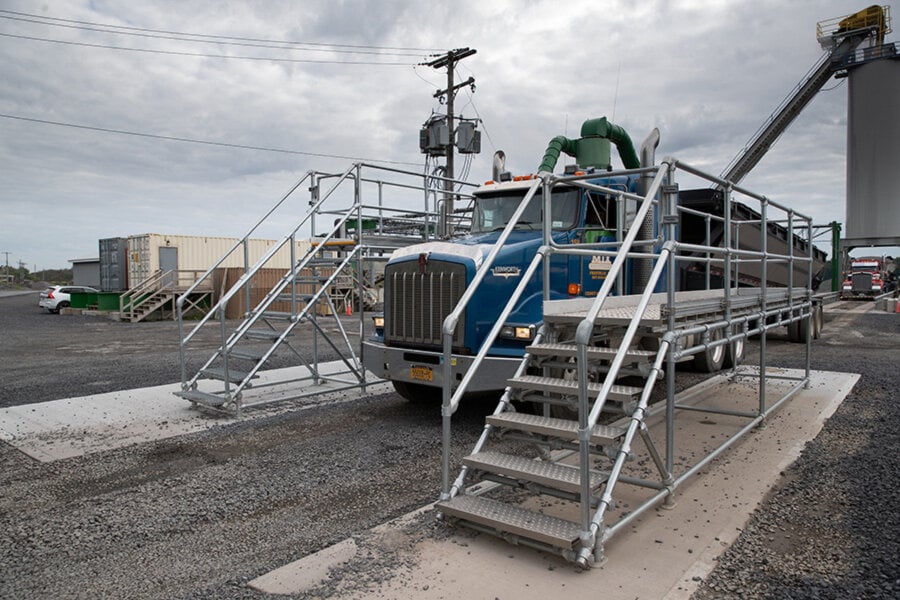
A. Purpose and Environment
Start by defining how the platform will be used. Is it for routine maintenance, production oversight, or material handling?
Indoor platforms may focus on ergonomics and mobility, while outdoor platforms need to withstand weather, chemicals, and corrosion. Consider space constraints, traffic flow, and surrounding equipment.
B. Load Capacity and Height Requirements
Every platform should match the total weight of workers, tools, and materials it will support. Also, ensure that the platform provides enough vertical reach and clearance for overhead equipment or ductwork.
C. Accessibility and Ergonomics
Safe access is crucial. Custom access stairs can greatly improve ergonomics by providing comfortable step heights, handrails, and non-slip treads. Guardrails and proper hand placement points reduce strain and prevent falls during routine climbs.
D. Mobility and Flexibility
If your work environment changes frequently, like in production floors, warehouses, or maintenance shops, a portable or modular platform is often ideal. These systems can be moved, expanded, or reconfigured as operations evolve.
E. Durability and Maintenance
Material choice impacts longevity:
- Aluminum – lightweight and corrosion-resistant, ideal for clean or mobile environments
- Steel – heavy-duty and durable, suitable for industrial and manufacturing use
- Galvanized finishes – protect against rust in outdoor or chemical-exposed settings
OSHA Requirements for Platforms

All industrial platforms must comply with OSHA Standard 29 CFR 1910.23, which governs walking-working surfaces. Compliance isn’t just about avoiding citations; it’s about ensuring a safe workspace for every employee.
Here are key OSHA platform requirements to keep in mind:
- Minimum platform width: Platforms must be wide enough to allow safe movement, typically at least 18 inches in most applications.
- Load capacity: Platforms must support their intended load; workers, tools, and materials, plus a safety margin.
- Guardrail systems: Guardrails are required on open sides and must be at least 42 inches high with midrails and toeboards.
- Slip-resistant surfaces: Walking surfaces must prevent slipping, especially in environments exposed to oil, water, or debris.
- Safe access points: Platforms must include secure stairs, ladders, or gates to ensure workers can enter and exit safely.
When to Choose Custom Access Stairs or Platforms

Not every facility fits the mold of a standard platform. In cases where space, height, or clearance constraints exist, a custom-engineered solution may be the safest and most practical option.
Custom access stairs or platforms are designed to meet the exact needs of your facility, offering:
- Precise height alignment with machinery or equipment
- Integration with existing infrastructure
- Optimized footprint for limited space
- Modular design for future expansion or relocation
Building a Safer, More Productive Facility
The right industrial work platform is more than just a structure; it’s an investment in your facility’s safety, efficiency, and compliance.
By understanding OSHA platform requirements and carefully considering your environment, load needs, and mobility requirements, you can select the best solution for your team.
When standard options don’t fit, custom access stairs and modular platforms offer a tailored approach that ensures both worker protection and operational efficiency.
Take time to assess your facility’s needs and consult with a fall protection expert to create a system that supports your workforce safely.
