Trench Fall Protection Options for OSHA Compliance
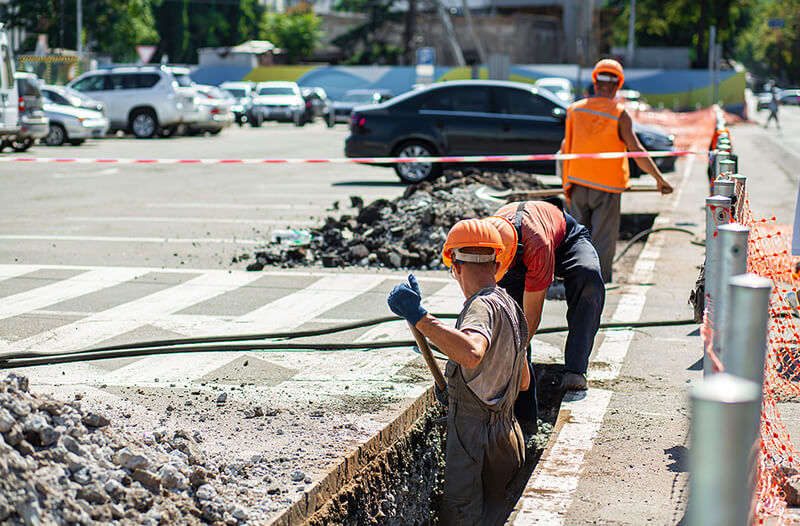
Trench fall protection refers to the safety measures designed to prevent workers and bystanders from falling into open excavations.
While most people think of fall protection in terms of rooftops or elevated platforms, the risk of falling into a trench is just as dangerous and just as common.
OSHA Standards for Trench and Excavation Safety
Under OSHA 29 CFR 1926 Subpart P (Excavations), employers are required to provide protective systems for trenches and excavations. When trenches are 6 feet or deeper, or when a fall hazard exists near an excavation, fall protection measures must be implemented.
These requirements aren’t optional; they’re a matter of compliance and worker safety. Failing to protect workers from trench-related falls can result in serious injuries, fines, and work stoppages.
Trench Fall Protection Options

Controlled Access Zones
Pro: One of the simplest protective measures is to restrict access around the excavation.
Controlled access zones can be established using clear signage, warning lines, or brightly colored markings that signal workers to stay clear. These zones help prevent unauthorized entry into hazardous areas while guiding foot traffic safely around trenches.
Con: They do not physically prevent someone from falling into the trench. These are designed to designate areas and direct traffic away from an open trench, but they don’t stop someone from falling into the trench.
Guardrails & Edge Protection
Pro: Guardrails provide a physical barrier between workers and the trench edge.
Temporary trench guardrail systems are often modular and portable, making them easy to move as the excavation progresses. Their high visibility and sturdy design make them effective at keeping both workers and visitors away from dangerous edges.
Con: They can be a bit bulky to set up and move around the site. Additionally, they don’t cover the hole itself.
Barriers & Fencing
Pro: For longer-term or high-traffic projects, rigid barricades or fencing around trench perimeters are an excellent solution.
Fencing, like guardrails, provides a clear separation between heavy equipment, vehicles, and personnel, reducing the chance of accidental falls. These barriers also work well in public or urban job sites where pedestrian safety is a concern.
Con: Like a guardrail, they can be bulky to set up, and they don’t protect the pit itself.
Trench Covers & Plates

Pro: When trenches must remain open but accessible, trench covers or steel plates offer a reliable solution.
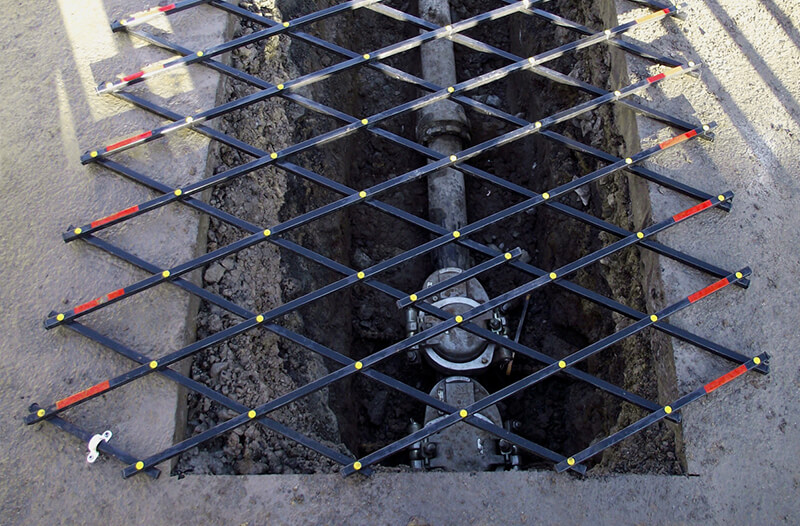
Products like the CoverSafe Trench allow for workers to easily access the trench and protect the workers in and around the trench. The CoverSafe trench is lightweight and collapsable for easy movement around jobsites and quick setups.
Steel plates are an ideal solution for when a trench or hole needs to be covered so that vehicles or pedestrians can cross over it.
Con: With a cover like the CoverSafe Trench, they are not designed to have vehicles drive over them, they are strictly to protect individual persons.
Choosing the Right Option for Your Site
No two job sites are the same, which means trench fall protection must be tailored to specific conditions. Factors like trench depth, project duration, site layout, and traffic flow (pedestrian and vehicle) all play a role in selecting the right system.
For example, if you have a wide or long trench, a cover is going to be difficult to use to protect the full dimensions of the trench. Therefore, it will be more optimal to use guardrail or controlled access zones for longer or wider trenches.
And as mentioned, if you are somewhere with a lot of foot traffic, a cover may be more ideal to protect pedestrians. This type of situation could benefit from additional barriers like guardrails or fencing.
Best Practices for Implementation
Speaking of which, even the best protection systems only work when properly managed. Here are a few tips to maximize trench safety:
- Conduct daily inspections of trench protection systems.
- Provide worker training on trench fall hazards and safe practices.
- Coordinate with subcontractors to ensure consistent compliance across the job site.
- Adjust protective measures as site conditions evolve.
Protect Workers and Stay Compliant Around Trenches
Trench fall protection is about prevention, not reaction.
By planning ahead and investing in the right solutions, you can safeguard your workforce, avoid costly OSHA penalties, and maintain project momentum.
With multiple trench fall protection options available, the right solution(s) can be implemented on any site.
Ready to improve your trench safety plan? Connect with one of our fall protection experts to explore trench cover options and other site-specific solutions.
