Pit Covers for Vehicle Maintenance Bays: The Hidden Fall Hazard

Vehicle inspection pits and oil bays are vital tools for keeping fleets, trucks, and service vehicles on the road. They make it easy for technicians to access undercarriages, perform inspections, and handle oil changes efficiently.
But these open pits come with a major, and often overlooked, hazard.
An uncovered pit can be a serious fall risk. In busy garages, a single misstep can lead to severe injury or downtime. Whether it’s a quick walk between bays or a tool retrieval during a shift change, the open space beneath a vehicle presents constant exposure.
Why Vehicle Pit Safety Deserves More Attention
In many vehicle service environments, most safety focus goes to overhead lifting, tool storage, or slip prevention. Meanwhile, open pits sit in the middle of the work area, often uncovered once a vehicle rolls out.
According to OSHA (29 CFR 1910.28), any floor opening large enough for a person to fall through must be protected. That includes vehicle service pits.
Yet, in many garages and fleet facilities, technicians are exposed daily to uncovered bays.
Common situations where the risk increases include:
- During shift changes when pits are temporarily empty
- While cleaning or servicing pit equipment
- When tools or parts are moved between bays
The Risks of Uncovered Service Pits
Open pits create a unique set of challenges that go beyond the obvious risk of a fall:
- Falls and injuries: Even a short drop into a pit can cause broken bones, head injuries, or worse.
- Trip and collision hazards: Hoses, cords, and clutter around the pit edge increase the chance of missteps.
- Operational downtime: An accident in the shop can halt work, delay service, and invite OSHA investigations.
- Liability exposure: Worker’s compensation claims and regulatory fines can easily outweigh the cost of prevention.
Pit Covers: A Simple, Effective Solution
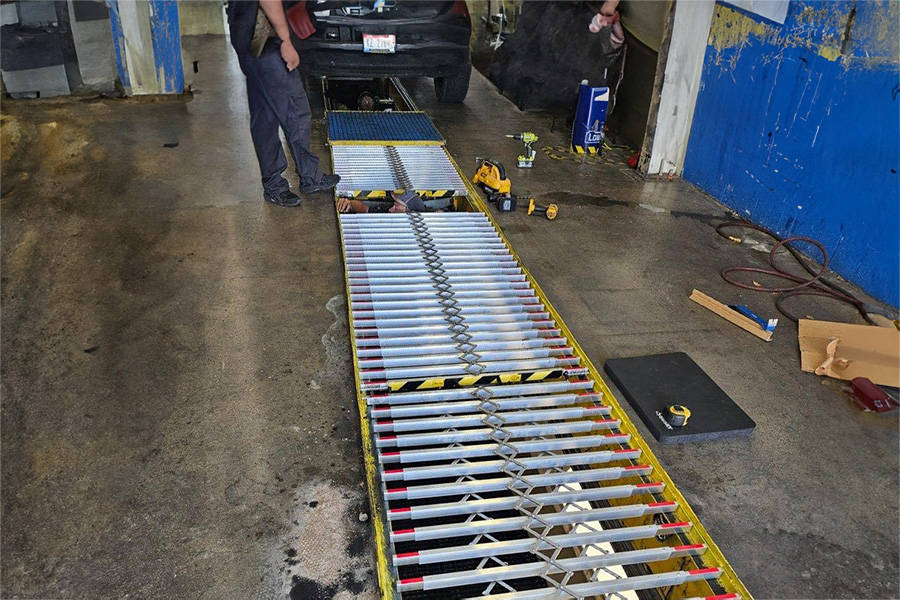
Garage pit covers and inspection pit covers are designed to prevent falls without disrupting daily work. They form a sturdy, walkable surface over the pit when it’s not in use, letting technicians move safely through the bay area.
There are several styles to fit different facility types:
- Manual covers: Lightweight, removable panels that can be placed between jobs; ideal for smaller garages.
- Hinged or sliding covers: Allow quick, easy operation in busy service bays.
- Modular pit cover systems: Used in larger fleet or industrial garages that need flexibility across multiple bays.
Benefits include:
- Prevents falls and keeps your facility OSHA-compliant
- Protects the pit from debris, fluids, or dropped tools
- Reduces housekeeping time and contamination
- Maintains smooth, continuous workflow between vehicles
Simple, reliable, and easy to use, pit covers eliminate one of the most persistent hazards in vehicle maintenance.
Design and Material Considerations
Choosing the right vehicle service pit cover depends on how your facility operates. Frequent vehicle turnover may call for hinged or sliding systems, while lower-volume shops may prefer lightweight manual panels.
Key features to look for:
- Slip-resistant surface for safe footing
- High load rating suitable for mechanics and vehicles
- Smooth, ergonomic operation so covers get used consistently
- Compatibility with your existing pit dimensions and layout
Integrating Pit Covers Into Everyday Safety Practice

Installing inspection pit covers is just one step toward a safer service environment. To make them truly effective, they should be integrated into your facility’s standard operating procedures.
- Make closing the pit a habit: Train staff to cover pits immediately after each service.
- Pair covers with other safety tools: Edge guards, signage, and proper lighting all help prevent accidents.
- Inspect regularly: Check that covers operate smoothly and remain structurally sound.
Closing the Gap on Pit Safety
Vehicle inspection pits make maintenance faster and more efficient, but when left open, they’re a hidden hazard that’s easy to overlook.
Investing in inspection pit covers is one of the simplest, most effective ways to prevent injuries, maintain compliance, and protect your team. Whether you’re operating a small garage or a large fleet facility, purpose-built garage pit covers can help eliminate risk and keep work moving safely.
Simplified Safety offers modular, easy-to-install access and safety systems designed for the realities of modern maintenance environments.
Connect with our team of fall protection experts to discuss what vehicle service pit cover is right for your shop.
