What are the Key Differences Between a Fall Arrest and Fall Restraint System?
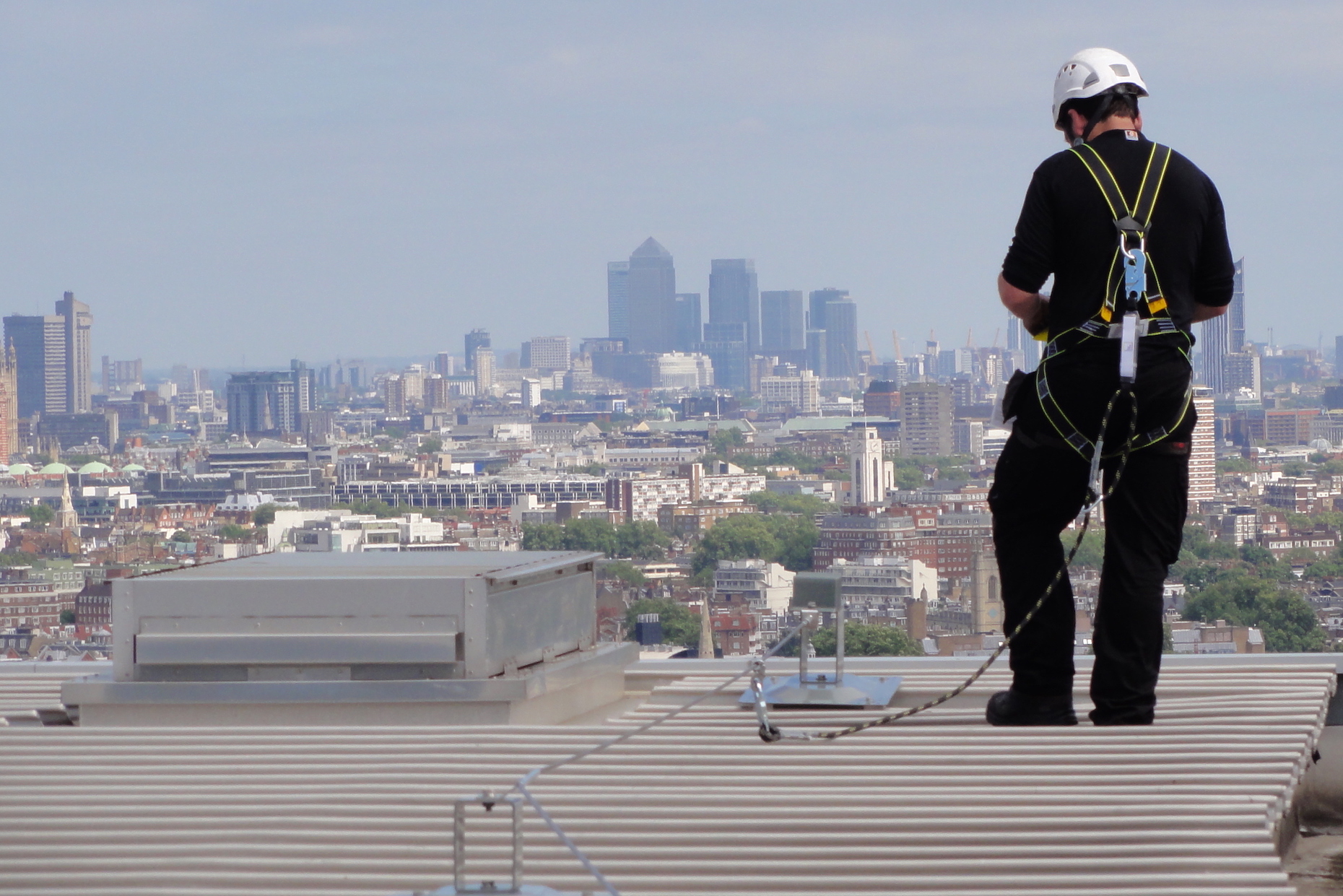
Fall arrest and fall restraint safety systems are very similar, yet have one important distinction between the two. If misunderstood the result could be devastating. What is the key difference between fall arrest and fall restraint?
What is a Fall Arrest System?

A fall arrest safety system typically includes an anchor point or series of anchor points, a safety lanyard or self-retracting lifeline, and a harness. This system must be designed to “arrest” or stop you before hitting the lower surface in the case of a fall. This gives you the freedom to walk all the way up to a fall hazard to do your work.
As an example, let's say you are unloading a flatbed truck or working on railcars, your walking/working surface is so narrow that any system that wouldn't allow you near the edge would limit your movement. Where you need full access to your working surface, fall arrest is typically your better option.
What is a Fall Restraint System?

While utilizing many of the same elements, a fall restraint safety system keeps you from getting close enough to the fall hazard to fall. Imagine a leash keeping you within a safe distance from the edge. You are free to do your work without concern of falling and possibly injuring yourself because you are unable to reach the drop.
What Makes These Active Fall Protection?
Regardless of using a fall arrest or fall restraint system, both are categorized under active fall protection safety systems.
Which is Safer, Fall Arrest or Fall Restraint?
There are many circumstances where you are forced to use fall arrest or fall restraint. However, in a scenario where you can choose between the two, which is the safer option?
Working from a position that eliminates the ability to fall will always be a safer option. If the conditions allow, working in fall restraint is always preferred. It is not for lack of safety and engineering built into the fall arrest systems, but for the potential for injuries that can occur during the arresting process.
Falling hurts, no matter what safety measures are put into place. The reality is that falls are unpredictable. You could fall backwards, forwards, trip, slip, be twisted in a knot, or be jumping! Any twisting, swinging, or landing awkwardly can cause injuries due to the hundreds of pounds of force impacting your body.
It is imperative to always be up to date with your training if working at heights. You should have a strong and comfortable understanding of all aspects of an active fall protection system, everything from the anchor point to the harness. It is also important to always have a rescue plan in place if you are using a fall arrest system.
What to Do When Active Fall Protection Doesn't Work?
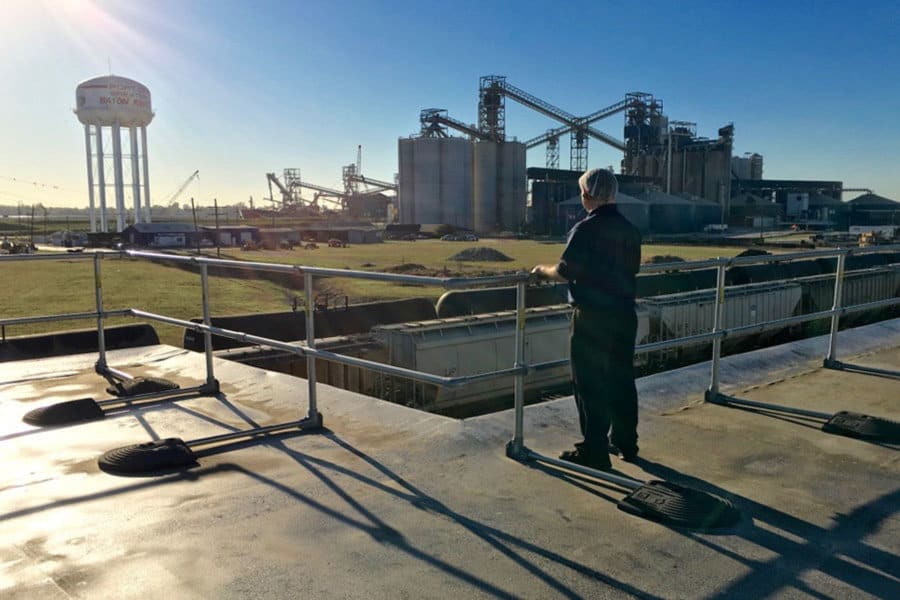
So, what do you do when fall arrest or restraint won't work on your rooftop?
Active fall protection systems rely on proper training, consistent use, and regular inspection, which can be challenging on roofs with frequent access by multiple trades, contractors, or maintenance teams. On busy facilities, the risk isn’t just the fall hazard itself, but the possibility of human error: forgetting to tie off, using the wrong anchor, or bypassing the system altogether to save time. Active systems can also slow down routine tasks and are often impractical for roofs with constant foot traffic or short-duration maintenance work.
In these situations, a passive fall protection approach is often the safer and more efficient solution. Kee Guard® non-penetrating guardrail provides full-facility fall protection by creating a physical barrier at roof edges, skylights, and other hazards without relying on user action.
Because it requires no roof penetration, Kee Guard helps protect roof warranties while delivering continuous, OSHA-compliant protection for anyone accessing the roof. The result is a safer rooftop environment that reduces liability, simplifies compliance, and protects every worker every time.
Click the button below to speak with a fall protection expert on what system is best for your rooftop.