Guardian Fall Protection vs. Kee Guard: Which Rooftop Safety System is Right for You?

When it comes to working safely at height, not all rooftop hazards are the same and neither are the solutions.
Two leading systems that address these challenges in different ways are Guardian Fall Protection and Kee Guard. Each system is designed to meet OSHA requirements while offering a distinct approach to protecting workers.
While both systems provide reliable fall protection, their applications differ. Guardian Fall Protection excels in temporary and mobile work environments, while Kee Guard is designed for long-term, passive rooftop safety.
Guardian Fall Protection
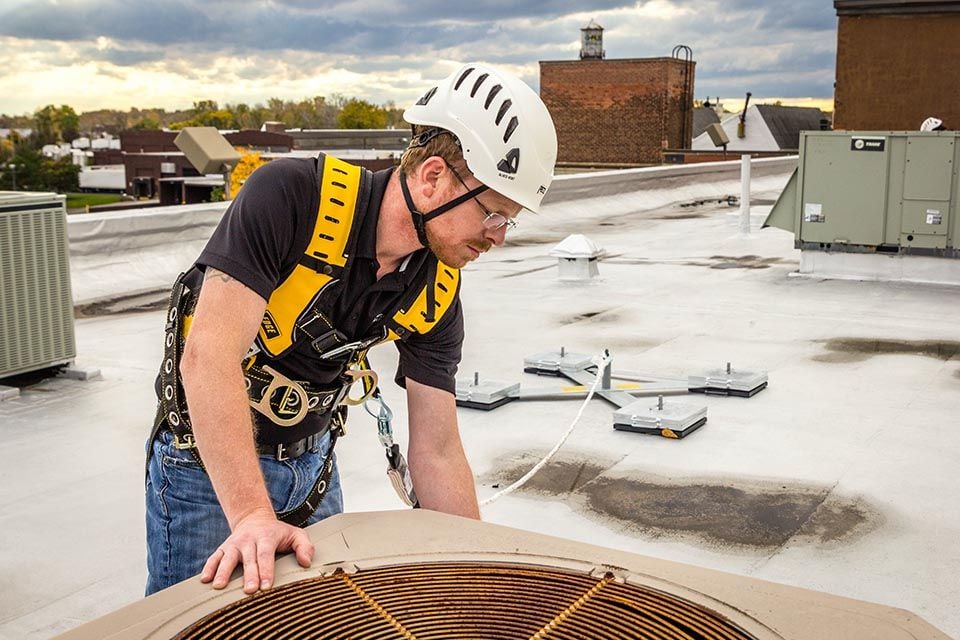
Guardian Fall Protection has become a trusted name in the construction and maintenance industries, known for providing adaptable and cost-effective safety systems.
The company specializes in temporary or portable fall protection, which is ideal for environments where work changes frequently or moves from site to site.
Common products include harnesses, lifelines, anchor points, and temporary guardrails, which form the backbone of an active fall protection system. These tools are designed to stop a fall in progress or restrain a worker from reaching a hazardous edge.
Strengths of Guardian Fall Protection:
- Highly versatile and mobile
- Cost-effective for short-term or project-based work
- Adaptable to changing jobsite conditions
Kee Guard Rooftop Guardrail
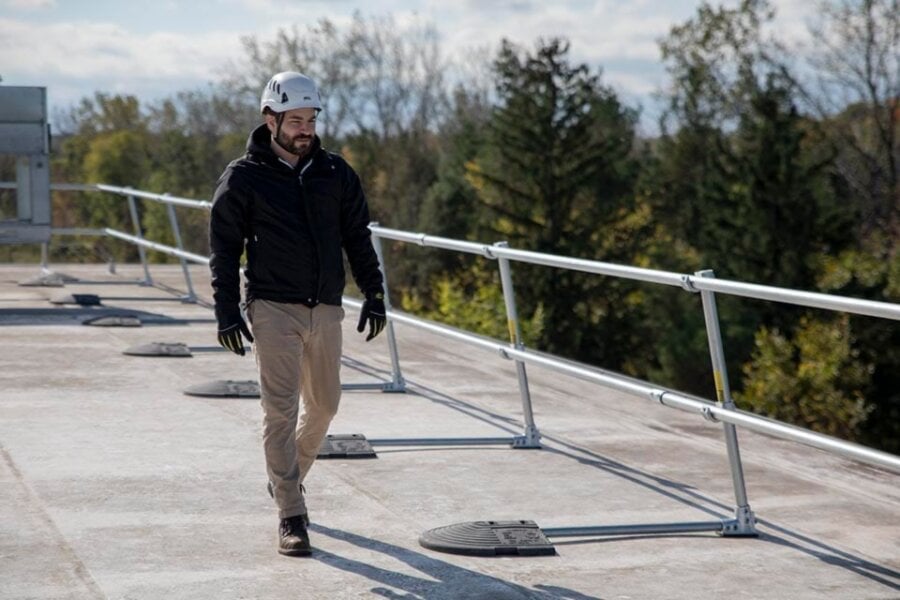
Kee Guard represents the other end of the fall protection spectrum; a modular, permanent guardrail solution designed for building owners and facility managers.
Its non-penetrating, free-standing design allows installation without compromising the roof membrane, making it ideal for flat or low-slope roofs.
As a passive fall protection system, Kee Guard doesn’t require user interaction like a harness or lanyard would. Once installed, it provides continuous, maintenance-free protection around the roof perimeter.
Strengths:
- Permanent and maintenance-free
- Fully OSHA-compliant
- Non-penetrating system preserves roof integrity
- Ideal for long-term rooftop access and maintenance
Key Differences Between Guardian and Kee Guard
|
Feature |
Guardian Fall Protection |
Kee Guard |
|
Primary Use |
Temporary or active fall protection |
Permanent or passive fall protection |
|
System Type |
Harness-based, anchor-driven, or mobile railings |
Modular, weighted guardrail |
|
Installation |
Portable or bolt-on |
Freestanding, no roof penetration |
|
Compliance Focus |
OSHA 1926 Subpart M (Construction) |
OSHA 1910 (General Industry) |
|
Best Environment |
Short-term jobs, active construction |
Long-term building maintenance |
|
Maintenance |
Requires periodic inspection of components |
Minimal once installed |
When to Use Guardian Fall Protection
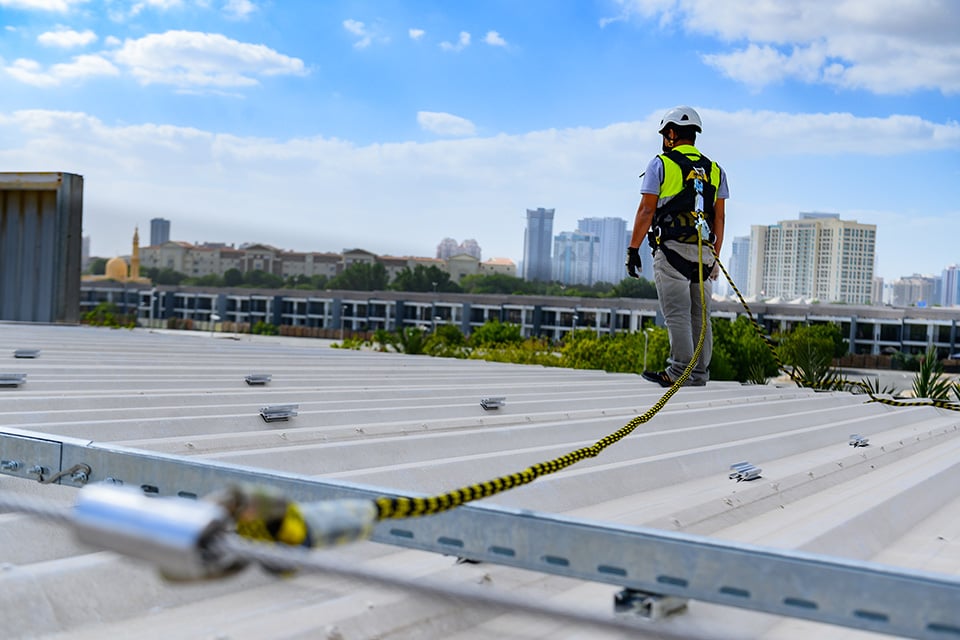
Guardian systems are best suited for temporary work or active construction environments. They offer flexibility and freedom of movement, which is perfect for jobs that change frequently or require mobility across different roof levels.
Use Guardian when:
- Work is temporary, such as construction, repair, or inspection tasks
- Workers must move between roof sections or equipment zones
- Guardrail installation isn’t practical due to space or layout
- Individual fall arrest or restraint systems are required
When to Use Kee Guard
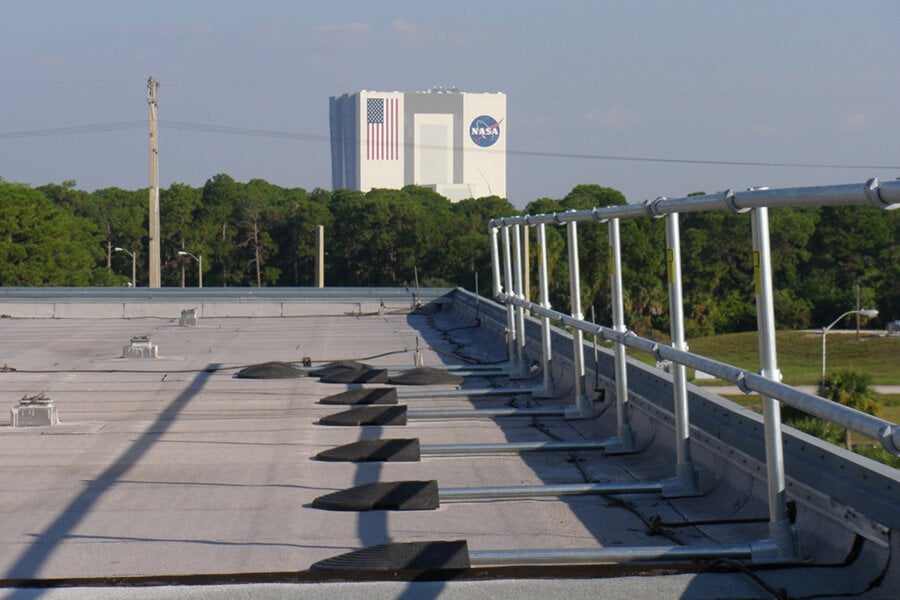
Kee Guard shines in situations requiring long-term or recurring rooftop access. It’s designed to provide continuous, passive protection for anyone working near the roof edge without the need for PPE or specialized training.
Use Kee Guard when:
- Routine maintenance or inspection work is performed regularly
- A non-penetrating solution is preferred to protect the roof membrane
- The roof is flat or low-slope with defined perimeters
- Building owners want permanent OSHA compliance and reduced liability
When to Use Both Guardian and Kee Guard Together
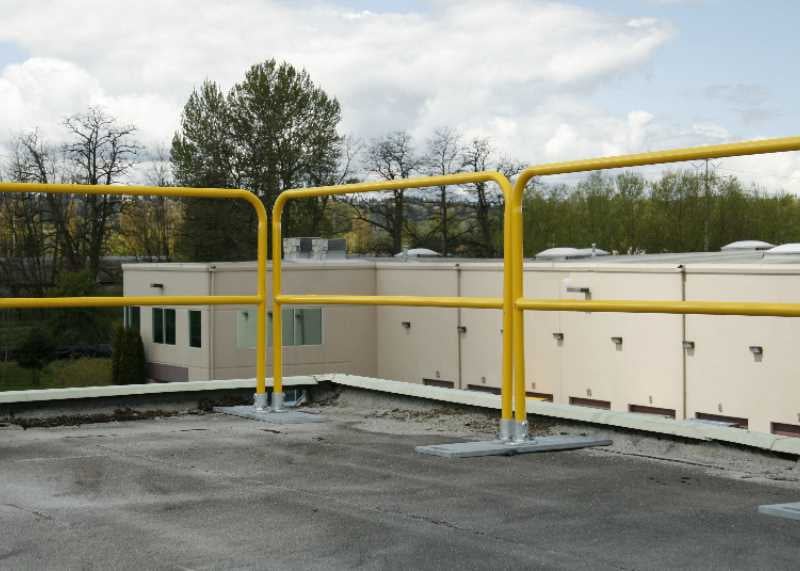
In many cases, the safest approach is to combine both systems for complete coverage. Kee Guard establishes passive perimeter protection, while Guardian Fall Protection provides active protection for areas where workers must go beyond the guardrail.
Use both systems together in situations such as:
- Large facilities with multiple roof zones. Some permanently guarded, others requiring temporary tie-offs
- Maintenance programs where workers occasionally need access outside of guarded areas
- Comprehensive safety plans that require redundancy for OSHA compliance
OSHA Compliance and Safety Standards
Both Guardian and Kee Guard systems meet or exceed OSHA requirements for rooftop fall protection:
- Guardian Fall Protection: OSHA 1926 Subpart M (Construction) and ANSI Z359
- Kee Guard: OSHA 1910.29(b) (General Industry) and EN 13374
Cost and Maintenance Considerations
- Guardian Fall Protection: Typically lower in upfront cost, but requires regular inspections, equipment replacements, and user training. Ideal for short-term or mobile use.
- Kee Guard: Higher initial investment, but virtually maintenance-free once installed. Designed for long-term savings and minimal upkeep.
Choosing the Right Fall Protection Solution for Your Facility
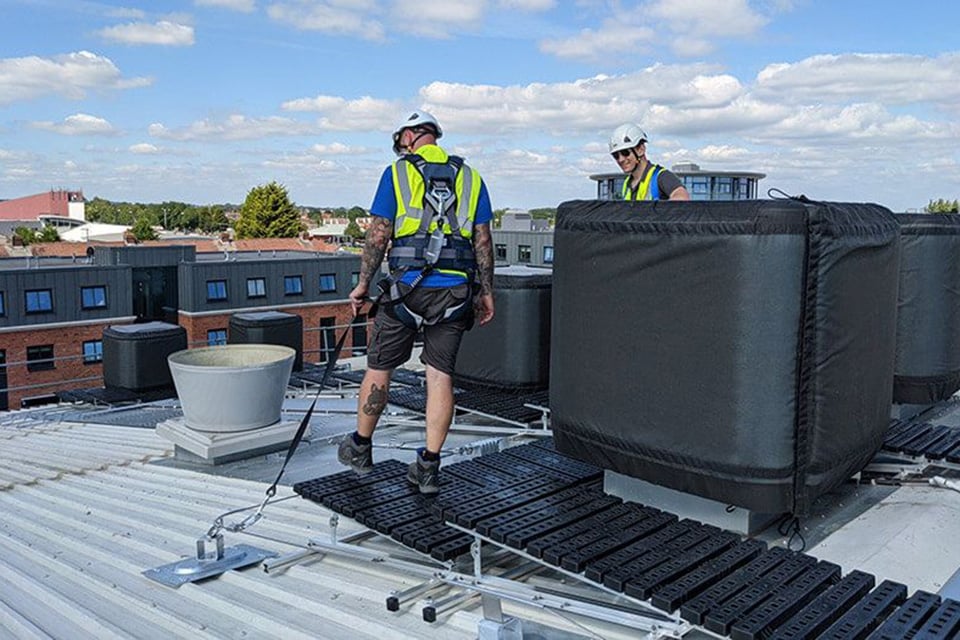
Selecting the right fall protection solution depends on a few key factors:
- Duration and frequency of rooftop access
- Type of work being performed
- Roof design and materials
- Applicable OSHA compliance (1910 vs. 1926)
A quick rule of thumb:
- For temporary or mobile projects → choose Guardian Fall Protection
- For long-term, recurring maintenance → choose Kee Guard
- For full-coverage protection → combine both systems
Building a Complete Fall Protection Strategy
No single solution covers every rooftop scenario. The most effective way to determine which fall protection solution is best or right for your rooftop is by contacting a fall protection expert.
Our team of experts are experienced with both systems and are here to assist you in surveying your rooftop/facility to determine the best fall protection solution for you.
