Economical Rooftop Guardrail: Cost-Effective Safety Without Compromise
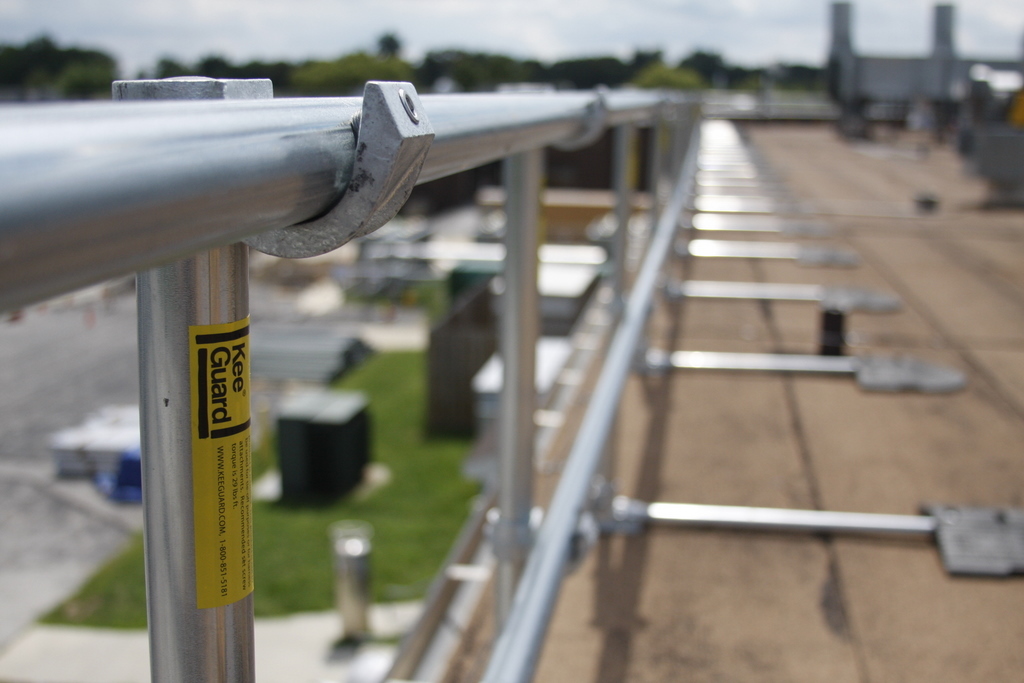
Knowing how much to spend on safety is the dance every company isn’t looking forward to.
Nobody wants to put people’s lives at risk. But our workspaces are full of dangerous hazards that could injure or kill people who put their trust in us.
A rooftop is a prime example of a risky work zone. From roof edges to skylights, it’s no surprise that falls from height remain a top contender for workplace injuries and fatalities.
So, what do you do?
Ideally, if you can’t remove the hazard, you provide full perimeter rooftop guardrail. But let’s be honest, budgets don’t always allow for complete fall protection with the best in market guardrail system.
Economical Guardrail Doesn’t Mean Unsafe
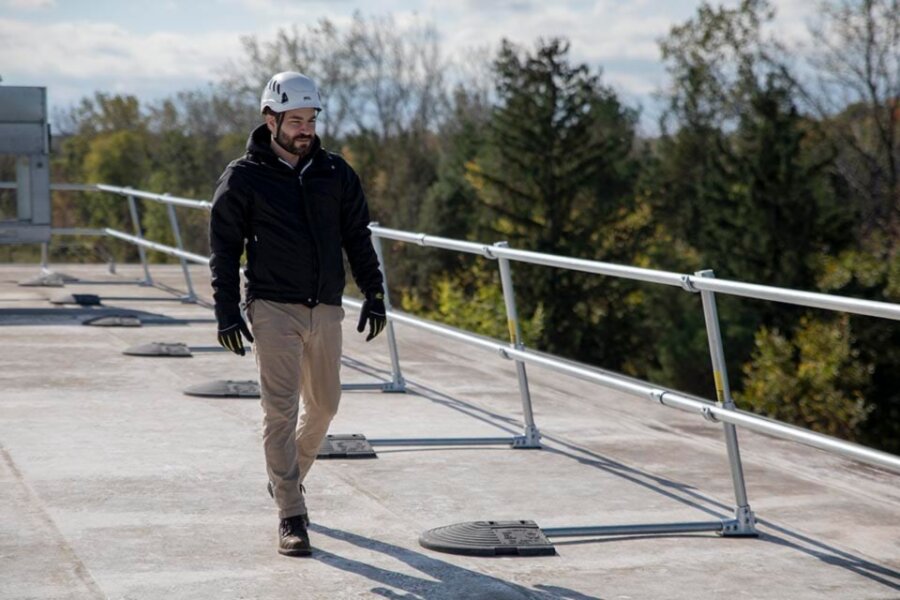
It’s important to understand the distinction between economical and cheap.
Economical means you receive good value in relation to the amount that you spend.
Cheap means you spend less than you should have or the product that you bought was not up to snuff. This can often mean it works NOW but not LATER.
A common misconception is that cost savings means reduced safety. This can be true, but doesn’t have to be. You can save money while still providing a complete fall protection program.
However, OSHA updated its code in 2017 with allowances that understand the dichotomy between safety and budget. They introduced terms like “temporary and infrequent” that allow you to use warning line instead of guardrail. Under the right circumstances, OSHA doesn't require fall protection.
Reduced safety is better than no safety at all.
Full-Perimeter Guardrail for Less

The next best thing from eliminating the hazard is to provide full perimeter guardrail. This means that every person who steps on your roof will be protected from the roof edge, regardless of training. No system is FOOL proof, but this is the best thing to do.
Let’s figure out how to save some money on full perimeter guardrail. Before we do that, we need to know what we’re saving money from.
The best guardrail solution is a non-penetrating guardrail that will last for decades without weighing down your roof for long periods of time. Also, you want a system that doesn’t have to be taken down in 70mph winds. Kee Guard is the system I always recommend when possible. High value comes with higher cost. So, what can you do?
You buy a mounted guardrail. You spend less on materials for a full perimeter guardrail system. It’s mounted to the structure, so you know it’s not going anywhere. I recommend a Kee Klamp Mounted Guardrail system because no welding is required. This makes future maintenance easier because you don’t need a welder to perform any repairs that may be needed. Plus, the guardrail doesn’t erode quicker due to the welding, weakening the guardrail over time and just looking rather unpleasant.
Saving Money with Less Guardrail
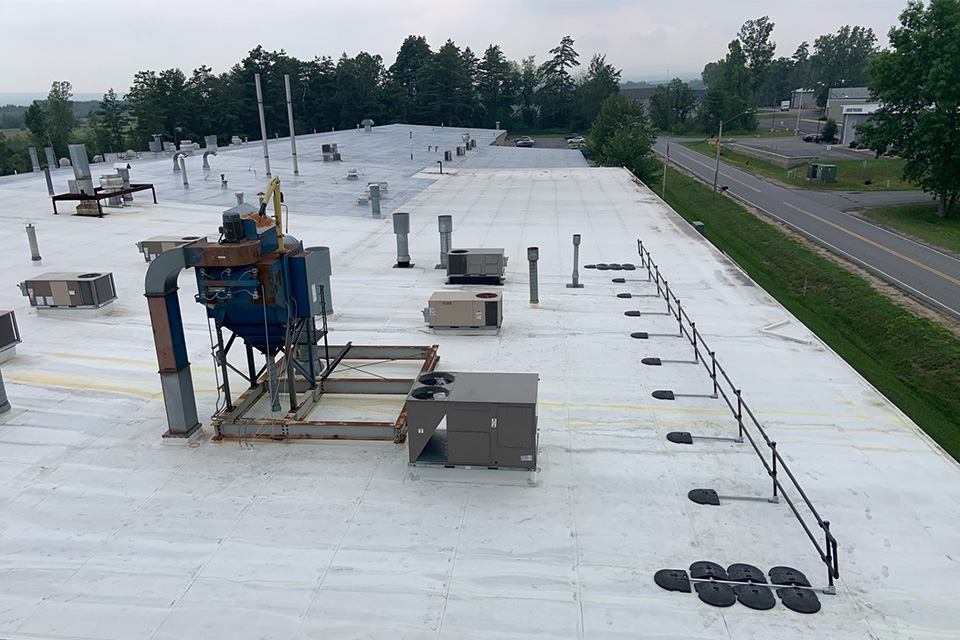
Another option is just to use less guardrail.
Providing some guardrail at strategic points is better than not providing it all. So, how do you decide where to put it?
Remember when I mentioned temporary and infrequent? Well, OSHA says that any work zone within 15 feet of the roof edge needs to have fall protection. If your work is temporary and infrequent, then no fall protection is needed beyond 15 feet.
Look for your HVAC units, ammonia pipes, roof hatches, access ladders, and any walking paths within 15 feet of the roof edge to help determine where guardrail needs to go.
Replace Guardrail to Reduce Cost
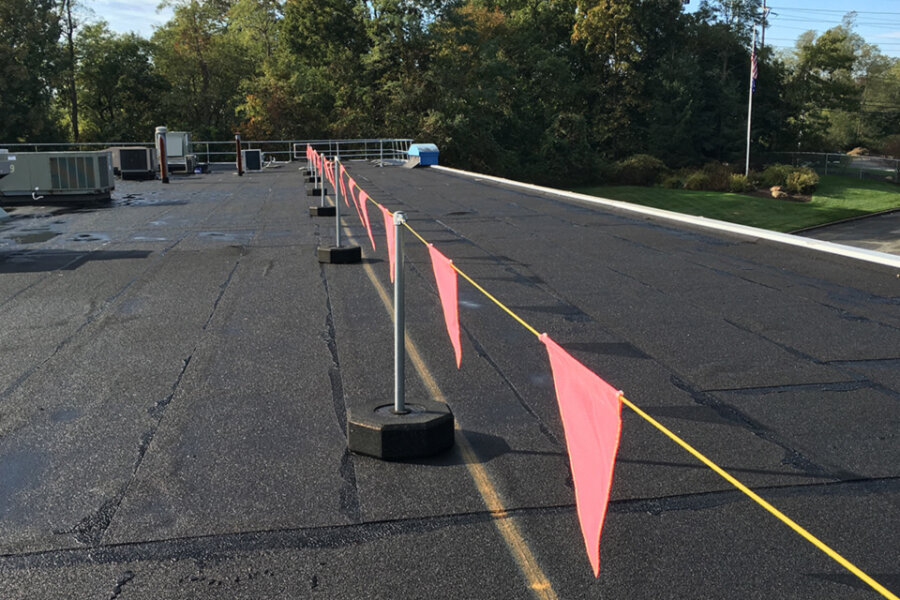
In the last OSHA update, warning line systems were allowed in General Industry as a solution in place of guardrail.
If your work is temporary and infrequent, then you can use a warning line system if it is placed 6 feet from the roof edge. This could save you a lot of money if your aim is OSHA compliance.
Install Guardrail in Phases
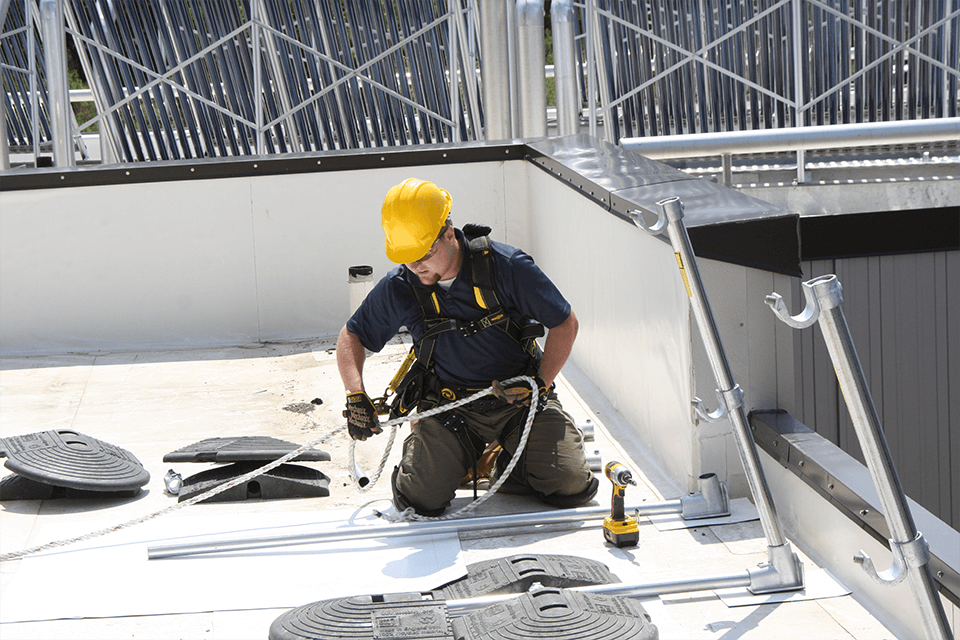
Sometimes, no matter what you want to do, you can’t budget the right amount to get a compliant and safe rooftop.
In this situation, install guardrail in phases, addressing the critical areas first.
When I’m trying to determine the risk of a work zone, I use a graph for Severity vs Frequency.
Severity addresses how dangerous the risk is. I ask questions like, “How far will someone fall?” or “How close to the edge is the work?”.
Frequency is simply how often the worker is exposed to the hazard. A unit that is inspected once every six months is not as risky as a ladder that is climbed once a month.
I like to use a scale from 1 to 5 for each of these and multiply the numbers to create a risk rating. This isn’t perfect, but it gives a good idea of where to focus first.
Long-Term Cost Savings with Guardrail
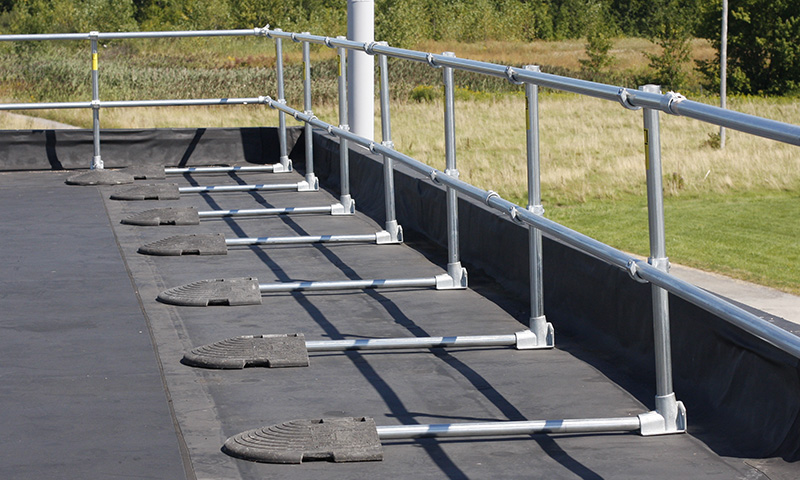
I would be remiss to not mention how you save money in other ways by installing the proper fall protection.
The right guardrail means you save money from insurance costs due to injuries, or legal liability and OSHA fines that inevitably come after an accident or failed inspection.
A higher-end solution that doesn’t penetrate your roof means that you don’t have repeating costs for roofers resealing the penetrations. Also, you don’t have to replace the guardrail itself for rotting out every 10 years.
Work with Experts to Maximizes Your Value
Economical means you found a good value at the right price. The best way to do that is to work with someone who knows how to provide that for you.
You don’t just want a product expert. You want a fall protection expert who knows the right products. The right person will know how to balance your need for compliance and protection with your budget. They’ll be able to walk through your specific site and give you the advice you need to make the best decision for your people.
If you need such an expert, our team is here to help you.
Remember, safety doesn’t need to be compromised for affordability.

