Understanding OSHA Requirements for Green Roof Fall Protection
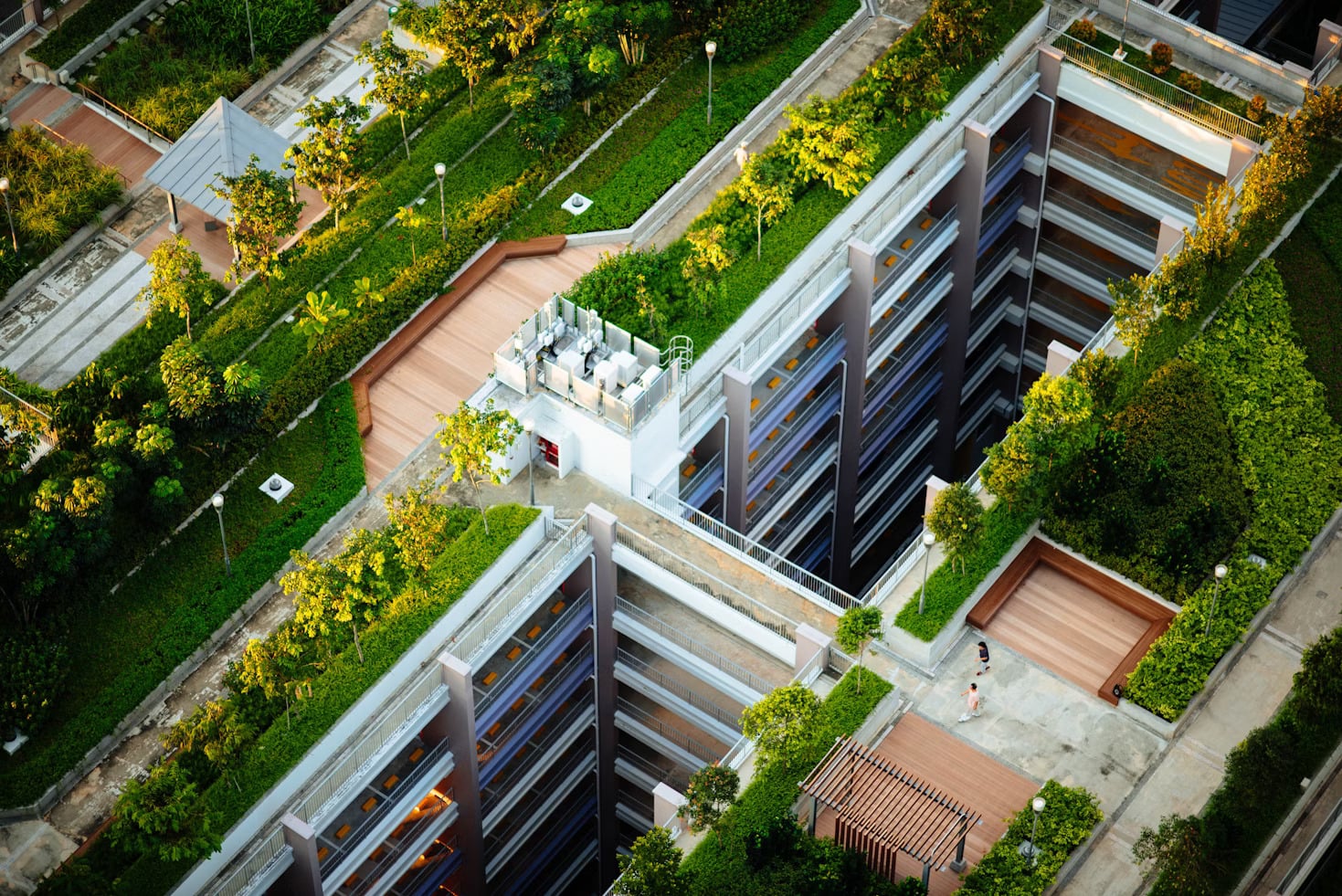
A green roof is a great way to add value to your building.
That value can be biodiversity, energy efficiency, storm water management, or aesthetics.
One of the many things that you need to consider for your green roof is what to do about fall protection.
Rooftop Green Space Hazards
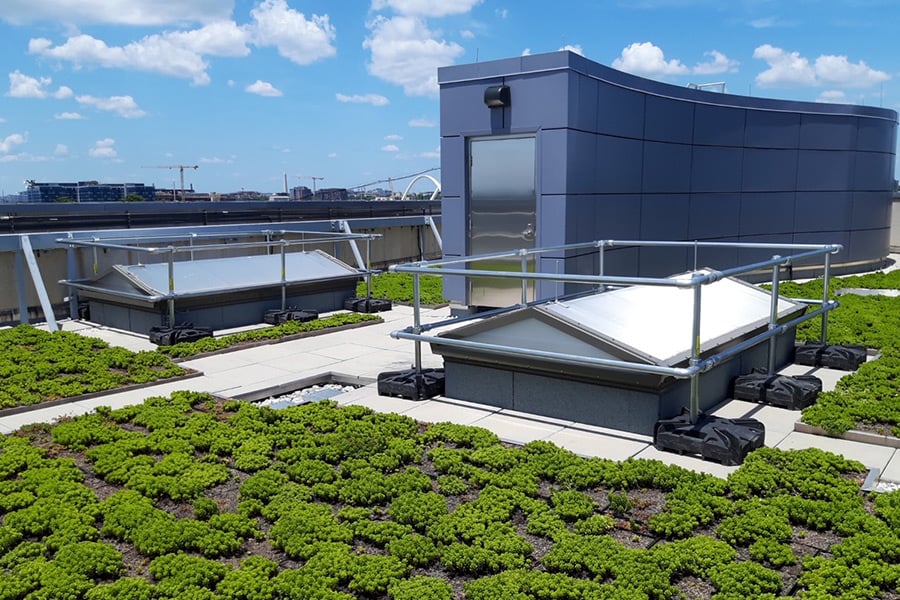
First things first, let’s talk about the risks to your people when it comes to having a green space on your roof.
Green roofs introduce uneven surfaces due to the soil and other vegetation. Various sections of the soil can settle differently or get moved around.
Normally, this isn’t a big deal.
Walking paths make it easy to navigate these areas. However, there are times when you need to walk on the vegetation for maintenance. In these cases, being on a rooftop makes a simple stumble very risky.
Also, because this is a green roof, regular maintenance will be required just like any lawn. This means irrigation, weeding, and other maintenance requirements so that your green roof doesn’t die. All this just means that people have more reasons to access the roof and be exposed to a fall hazard.
Depending on what you grow on your roof, visual obstructions can be an issue. Good rain followed by the glorious sun can cause weeds and tall grass to sprout like they were fed Miracle-Gro. It happens to my lawn often enough. All this just means you may not see the skylight or the edge of the roof that you’re working near before it’s too late.
So, with uneven surfaces, extra trips to the roof for maintenance, and potential visibility issues, what do you do?
OSHA Code for Green Roofs
OSHA does not have a specific code governing the maintenance of green roofs. There is a simple reason for this. According to OSHA, maintenance of green roofs falls under the general industry standards.
Instead of going into detail for OSHA requirements, here is a quick list:
- Any edge 4 feet or more above a lower level needs fall protection
- Fall protection can be a guardrail, a lifeline/anchor system, or safety netting
- Roofs with a slope of 4/12 or less can use warning lines 15 feet from the roof edge
- These same low slope roofs have different rules when the work is temporary and infrequent (the work both happens once a month or less and takes 2 hours or less to complete)
Basically, if you have a green roof, then you need fall protection on that roof. Someone will have to gain access to that roof for maintenance.
Fall Protection for Green Roofs
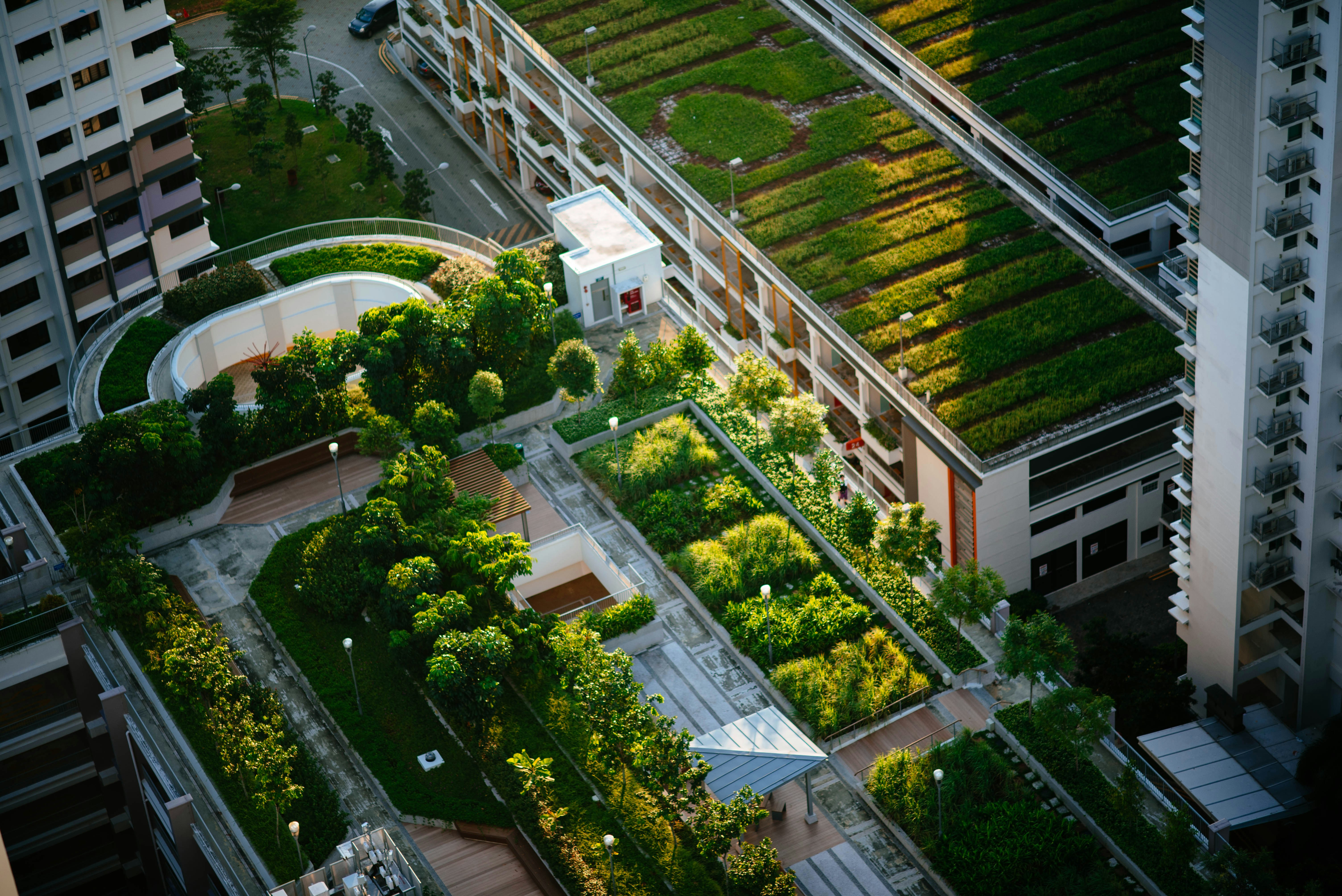
Green Roof Anchors and Lifelines
You can use a personal fall protection system (PFPS). This is your anchor and lifeline system. The worker will have to wear a harness and connect to a lifeline or anchor using a lanyard or rope with a rope grab.
PRO: An advantage of a PFPS is its aesthetics. Because these are installed further into the roof and are shorter in height (12-18 inches typically), they are harder to see from the ground and adjacent buildings.
Another positive is that they are very common. So, contractors will be more familiar and easier to train on its use.
CON: Despite this being a go-to for many projects, this is the riskiest option for fall protection. This is an active fall protection system, meaning users are required to interact with the system in order for it to work. This leads to our first problem. You must trust that the person using the system will actually use it and do it correctly. I know we all want to believe the best about our employees, but it just takes one time, one shortcut, one mistake, for a tragedy to happen.
Additionally, there is a laundry list of requirements for lifeline systems that add to ongoing maintenance costs, like continued training and testing.
Also, vegetation can and will grow into and around the lifeline system. Users will have a harder time finding it and may have to spend time clearing it as well.
Warning Lines for Green Roofs
Warning lines systems are used for demarcation. This will be a vertical post with a cable, most often with a system of flags for visibility.
A warning line system can be placed 15 feet from the roof edge to provide compliance with OSHA. If the work is temporary and infrequent, then 6 feet from the roof edge will work.
PRO: A warning line system is a passive fall protection system. This means no active participation is required (the user does not require PPE). A user can clearly see where the hazard lies and stay far enough away from it to be safer on the roof.
Warning line systems are among the most cost-effective solutions for your roof.
CON: The disadvantage is in the name. It’s a warning system, not a barrier to prevent access to the hazard. All that stands between a user and the edge is a cable with flags that are only required to withstand 16 lbs of force.
Guardrails for Green Rooftops
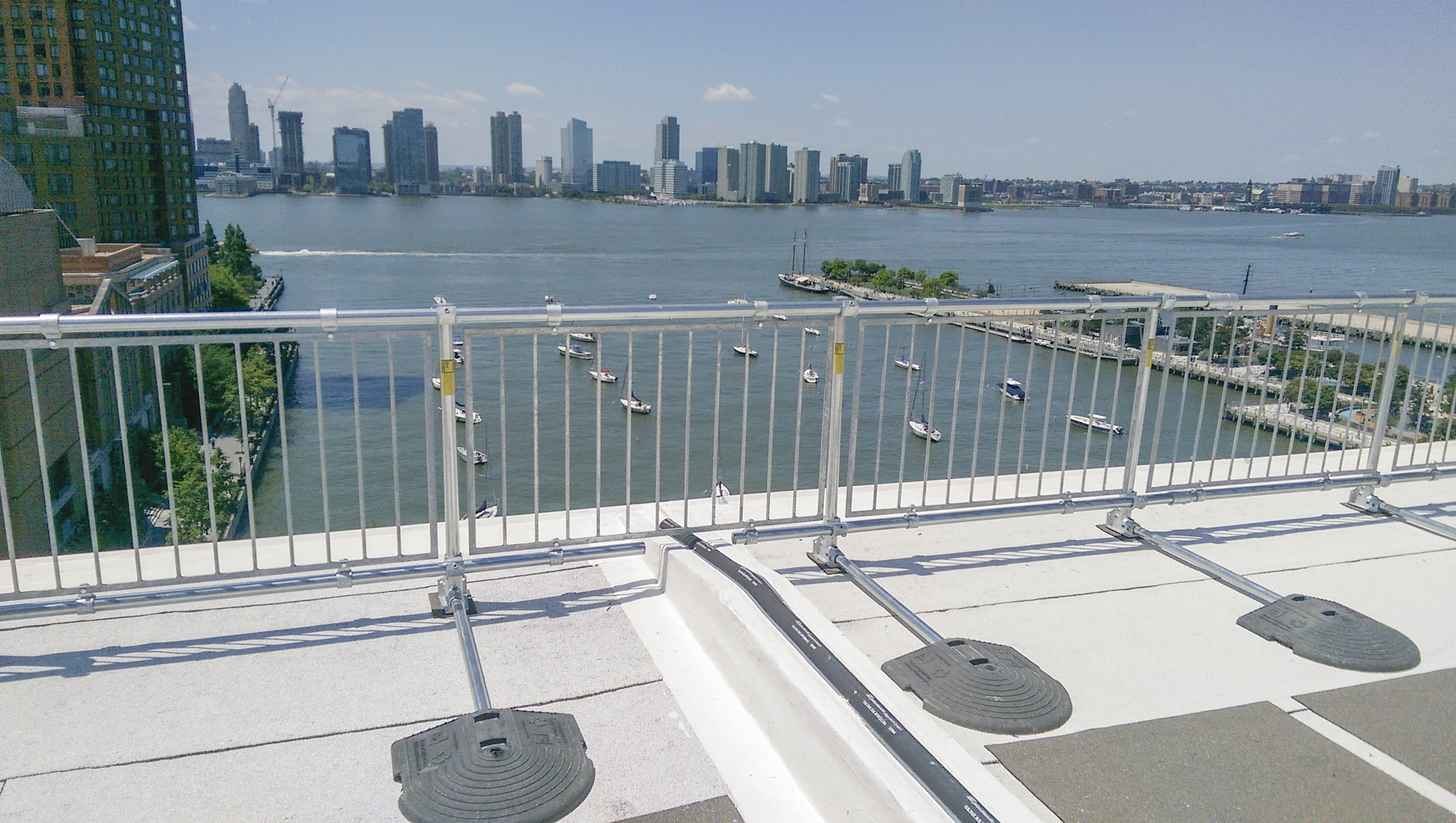
The best option is most often a guardrail. A guardrail is a physical barrier that can withstand 200 lbs of force or more to prevent a user from falls at height. Guardrails can be non-penetrating, mount to a parapet, or mount to the deck of your roof.
PRO: Like a warning line system, a guardrail doesn’t require a user to do anything to be protected by it. It doesn’t matter how often you have to go back on that roof to pick weeds or maintenance a fan. The guardrail will be there and keep your people safe.
Unlike a warning line system, a guardrail is required to withstand at least 200 lbs of force on the top rail. So, you don’t have to worry about someone easily pushing past it.
Fall Protection Expert Opinion on Green Roof Fall Protection

The Hierarchy of Fall Protection is very clear. PPE should be a last resort.
We agree.
A rooftop guardrail is a better means of keeping people safe. Training requirements are less extensive and frequent. There isn’t a limit to how many people can use it. And it works without having someone do something extra, like put on a harness and connect to an anchor.
You don’t even have to mount to the deck of your roof if you don’t want to.
Kee Guard uses a light counter-weight system (30 lbs) made from recycled PVC, which just adds to that green initiative.
Kee Guard goes beyond OSHA requirements. This system can be designed to meet building code standards, and it can include engineering if you’re at risk of high winds.
Additional Green Roof Safety

Roof Hatches to Green Roofs
Skylights on Green Roofs
Green Roof Fall Protection Considerations
Here are a few things that are specific to green roofs that you need to consider with your fall protection.
Your soil level effects the height of the fall protection. You will need taller anchors or guardrails in order to have proper clearance. For instance, a guardrail has to be 42 inches above the walking / working surface. In this case, that surface is the top of the soil and not the roof surface. This means you’ll need some extra inches of height in your guardrail to be compliant.
Vegetation introduces it’s own hazard. It will grow. This growth means that your lifeline systems could be invisible or compromised due to vegetation growing around and on the system. Also, this can block the view of warning line systems, preventing a user from knowing where the safe zones are while working.
Make sure that you keep a consistent maintenance schedule to keep your vegetation from compromising your fall protection plan.
Penetrations on a green roof can increase risk to your roof. Every penetration, no matter how well sealed, is a potential risk point for leaking. This is a just another concern when considering rooftop anchors and mounted guardrail systems.
Conclusion
There is no denying the appeal and value of a green roof. Beyond the value, we need to consider how to keep people safe that access these roofs..
You don’t have to do it alone.
Our team of fall protection experts can help you design a system that protects your employees or tenants and keeps your contractors safe while installing or maintaining the green roof.

